


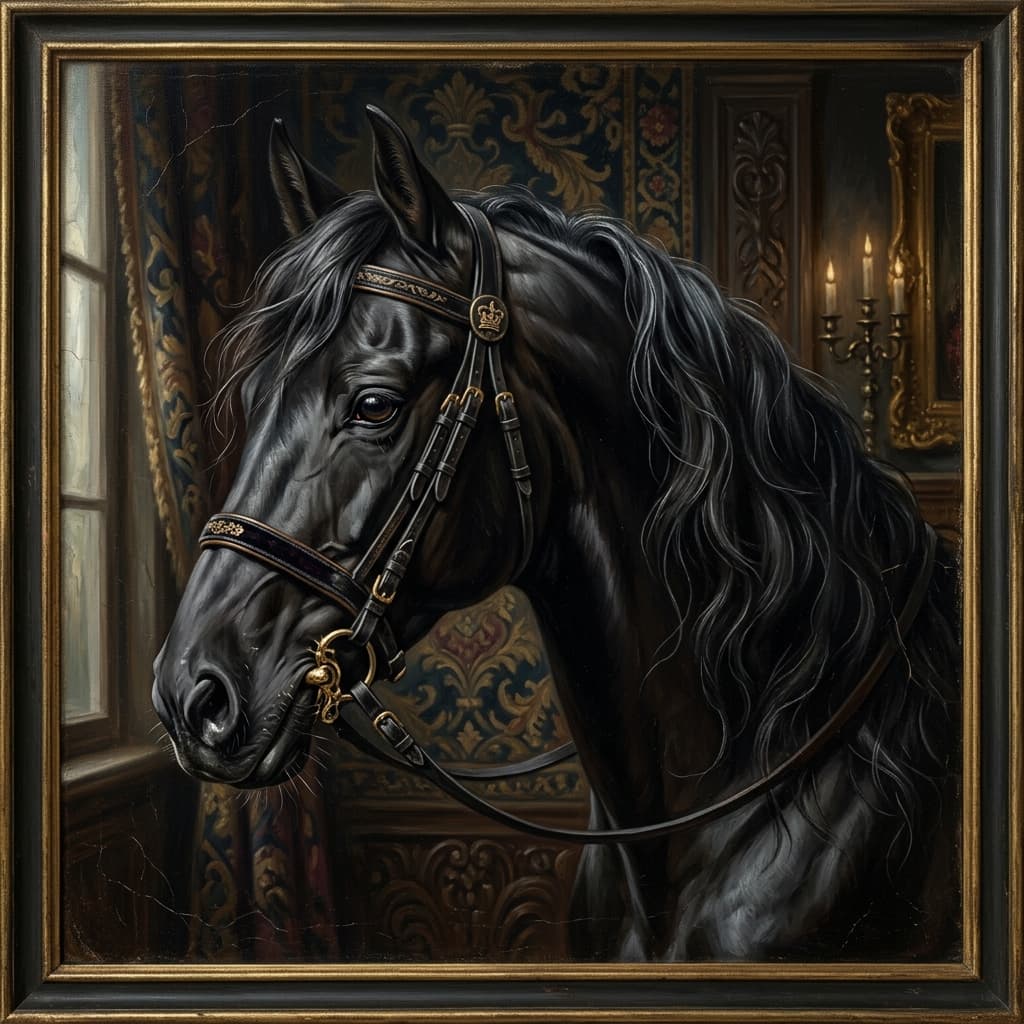
Chapter 1: My Early Home
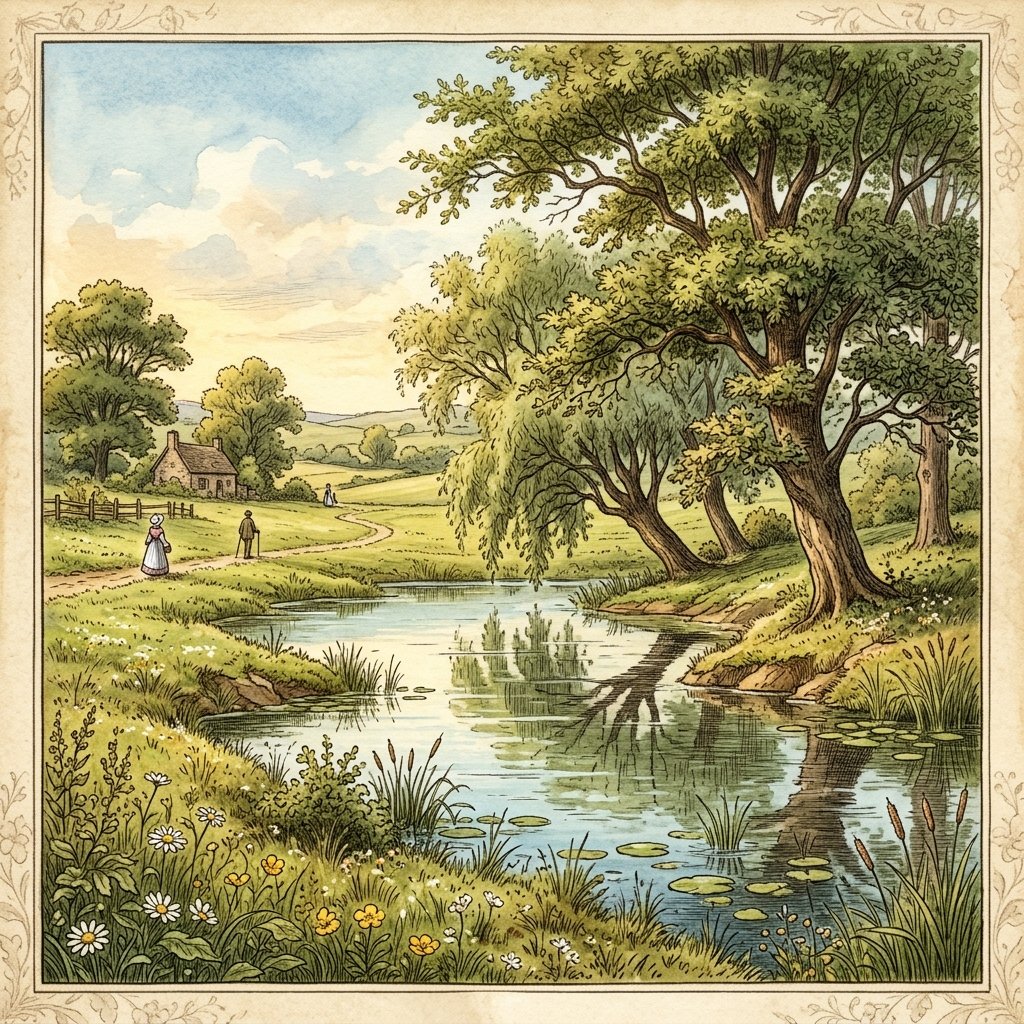
The first place that I can well remember was a large pleasant meadow with a pond of clear water in it. Some shady trees leaned over it, and rushes and water-lilies grew at the deep end. Over the hedge on one side we looked into a plowed field, and on the other we looked over a gate at our master's house, which stood by the roadside; at the top of the meadow was a grove of fir trees, and at the bottom a running brook overhung by a steep bank.
While I was young I lived upon my mother's milk, as I could not eat grass. In the daytime I ran by her side, and at night I lay down close by her. When it was hot we used to stand by the pond in the shade of the trees, and when it was cold we had a nice warm shed near the grove.
Learning to Run
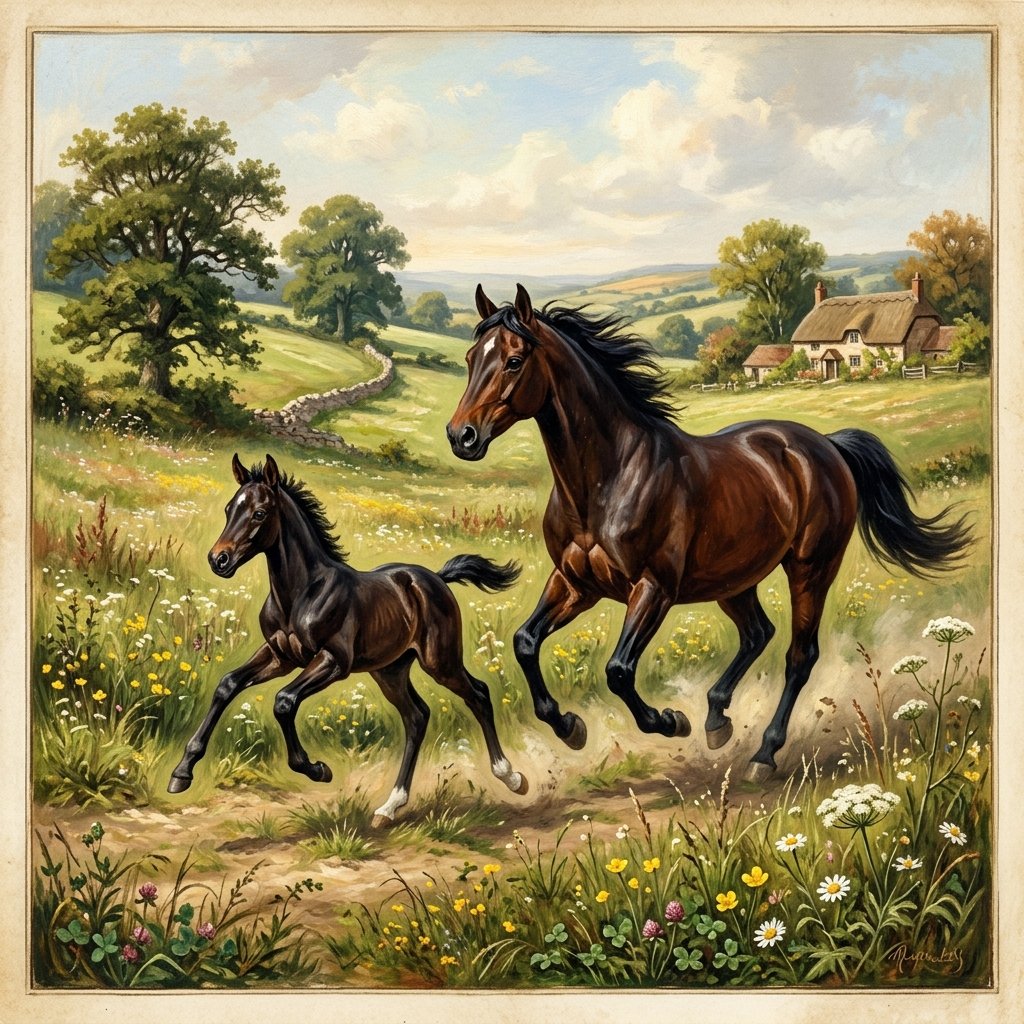
As soon as I was old enough to eat grass my mother used to go out to work in the daytime, and come back in the evening.
There were six young colts in the meadow besides me; they were older than I was; some were nearly as large as grown-up horses. I used to run with them, and had great fun; we used to gallop all together round and round the field as hard as we could go. Sometimes we had rather rough play, for they would frequently bite and kick as well as gallop.
One day, when there was a good deal of kicking, my mother whinnied to me to come to her, and then she said:
"I wish you to pay attention to what I am going to say to you. The colts who live here are very good colts, but they are cart-horse colts, and of course they have not learned manners. You have been well-bred and well-born; your father has a great name in these parts, and your grandfather won the cup two years at the Newmarket races; your grandmother had the sweetest temper of any horse I ever knew, and I think you have never seen me kick or bite. I hope you will grow up gentle and good, and never learn bad ways; do your work with a good will, lift your feet up well when you trot, and never bite or kick even in play."
I have never forgotten my mother's advice; I knew she was a wise old horse, and our master thought a great deal of her.
Prowlpad Reading Notes
Anna Sewell wrote Black Beauty over eleven years while largely bedridden, completing the manuscript just months before her death in 1878. She intended it as a direct appeal to the working people of England who handled horses daily — cab drivers, grooms, farriers — rather than a children's book. The strategy worked. Within a decade of publication, the British and American societies for the prevention of cruelty to animals had distributed more than a million copies. The cruel bearing rein — a device that forced horses to hold their heads at an unnatural angle — was largely abolished in Britain within a generation of the novel's release.
What makes Black Beauty extraordinary as a piece of animal writing is its commitment to interiority. Sewell does not observe the horse from the outside. She inhabits him. The warm meadow, the weight of the harness, the difference between a good hand on the reins and a rough one — these are rendered with a physical precision that gives the story its moral authority. It is, at its core, a novel about empathy as a learned skill. For readers interested in Prowlpad's original animal fiction, Black Beauty is the ancestor of the tradition.