


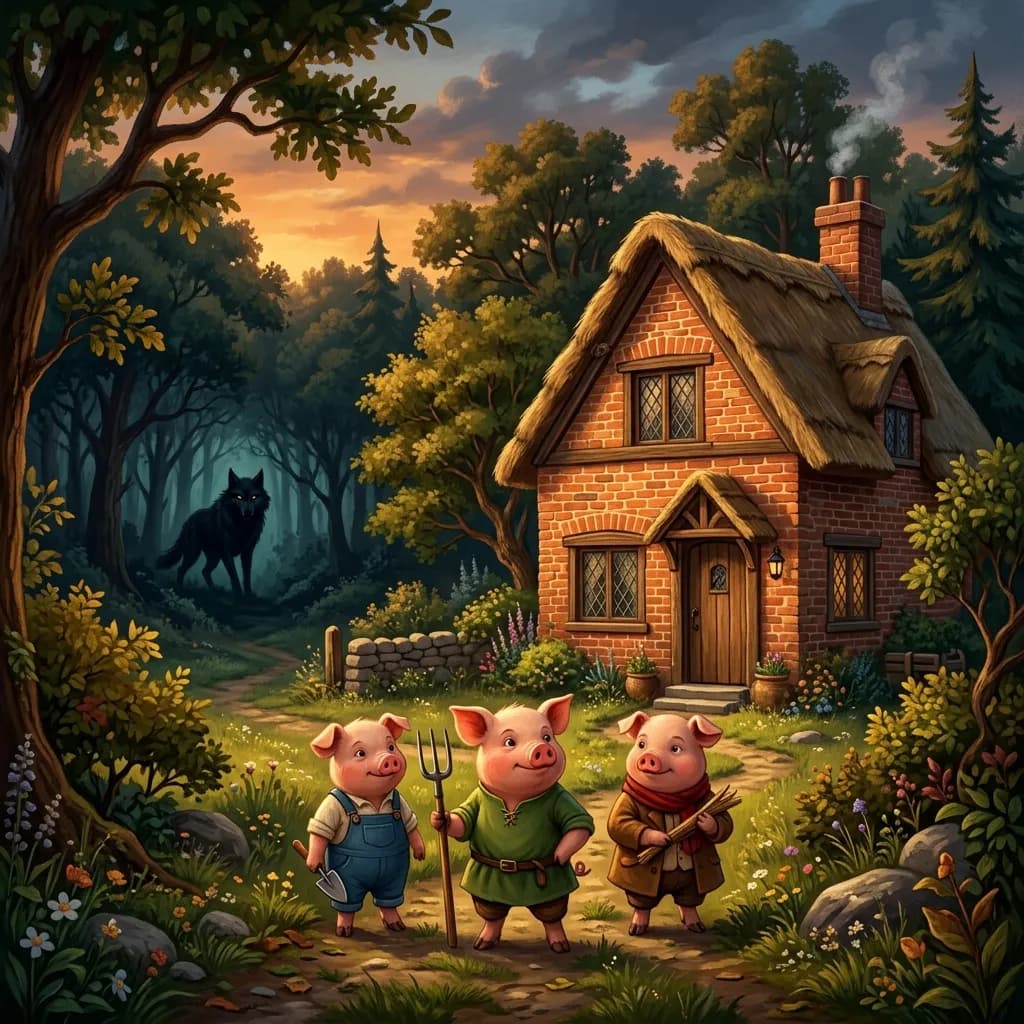
The Departure
Once upon a time, an old mother pig had three little pigs. She had no money to keep them, so she sent them out into the world to seek their fortune.
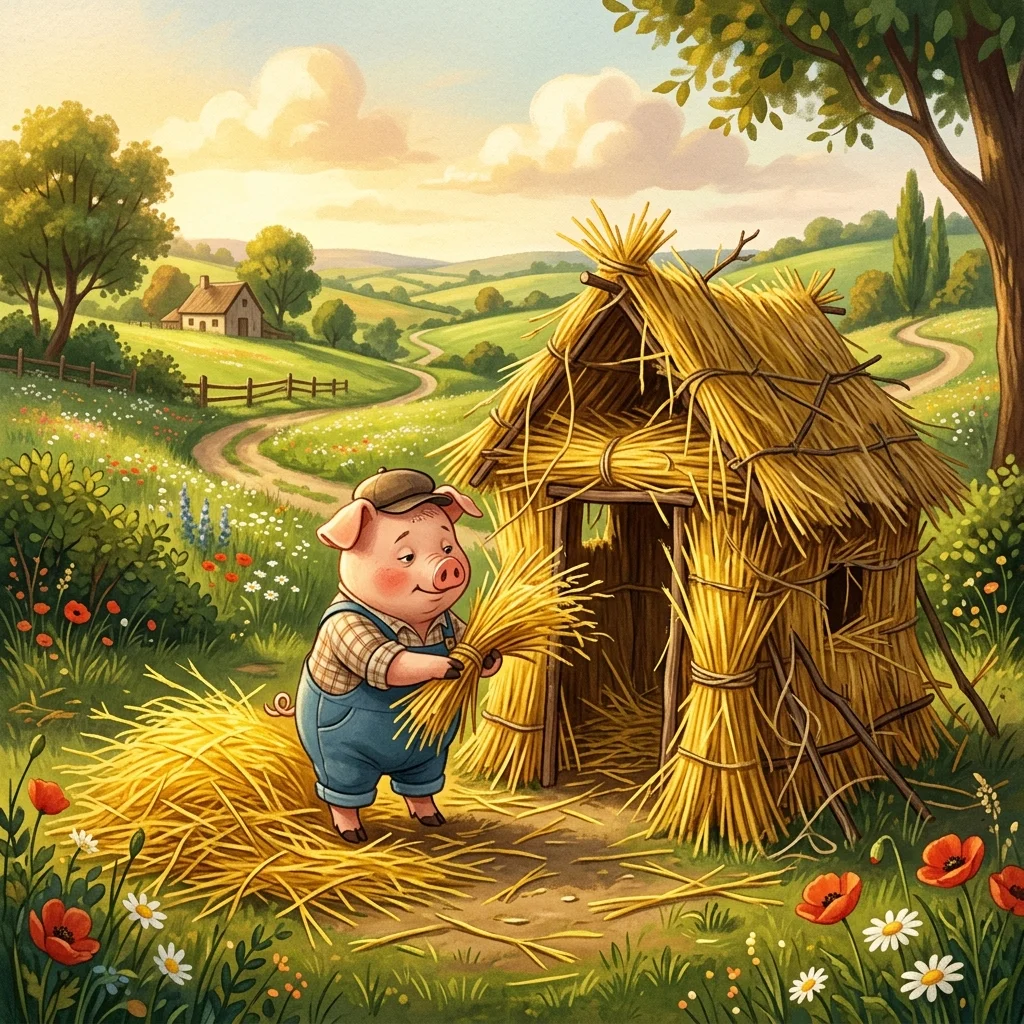
The first little pig was very lazy. He didn't want to work at all. He gathered a bundle of loose straw from a nearby field and quickly built a small hut. He finished before noon and spent the rest of the day sleeping in the sun.
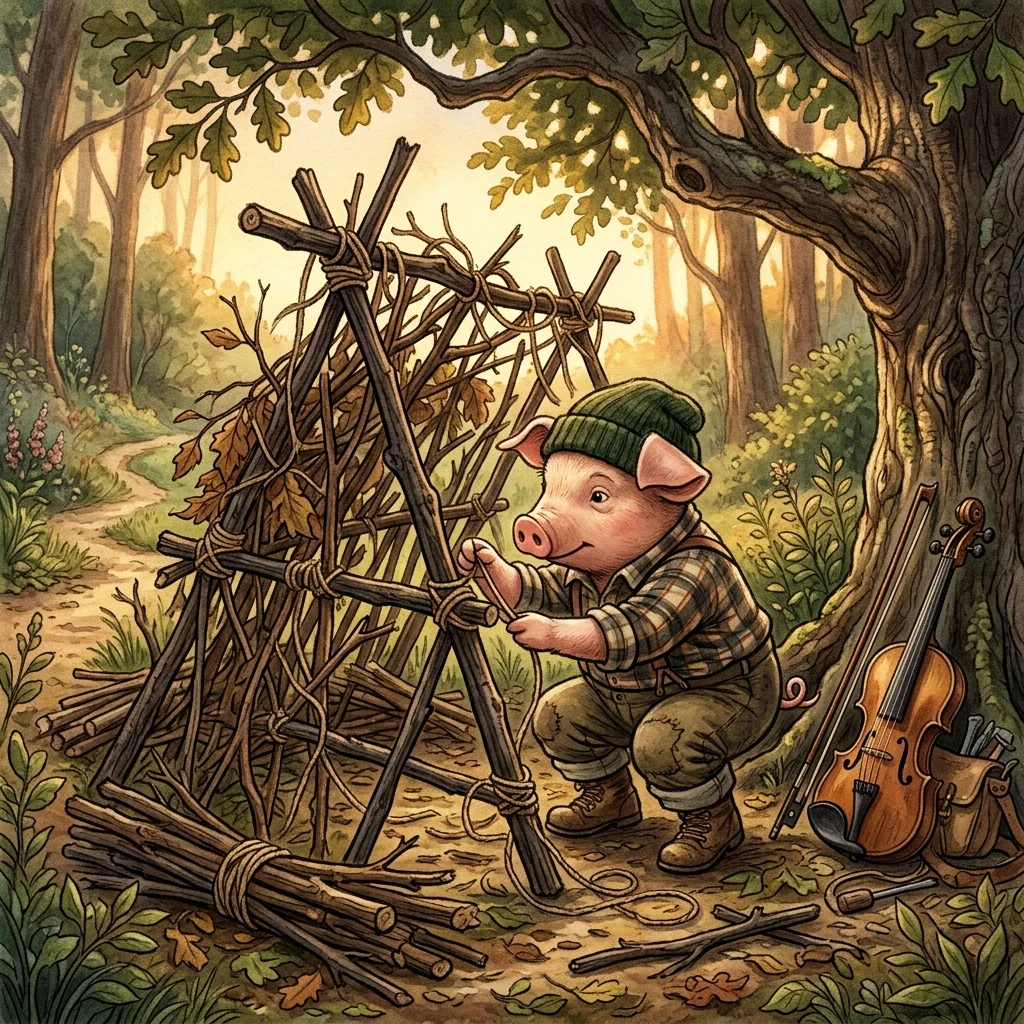
The second little pig was somewhat lazy. He found a pile of dry sticks and hastily tied them together. His house was finished by late afternoon. He dusted his hands and went to play his fiddle.
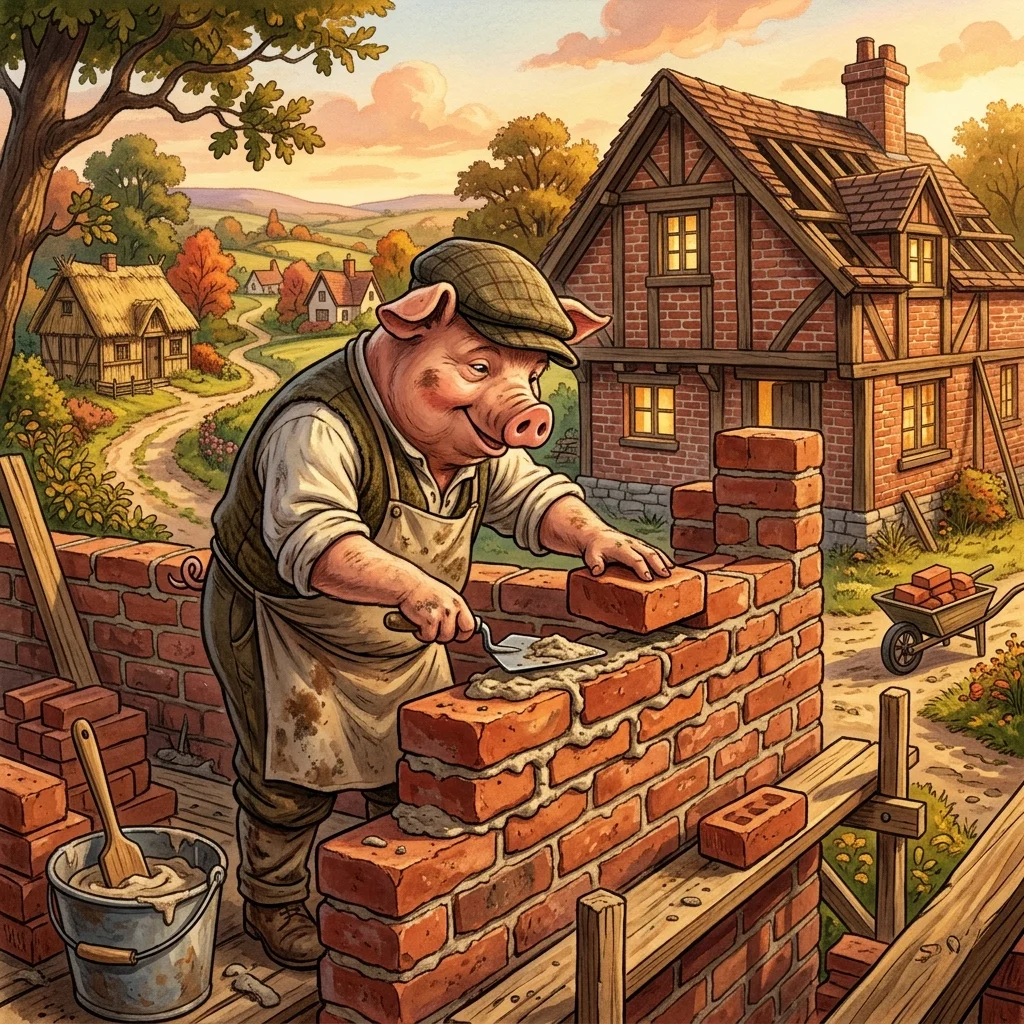
The third little pig was wise. He knew that winter was coming and the woods were full of danger. He carried heavy, fired bricks and mixed thick mortar. He worked from dawn until dusk, laying brick after brick. His house took days to finish, but when he locked the heavy wooden door, he knew he was safe.
The Wolf Arrives
A few days later, the Big Bad Wolf stalked into the valley. He smelled fresh pork. He followed the scent to the house of straw and knocked on the flimsy door.
"Little pig, little pig, let me come in," the wolf growled.
The first pig trembled. "Not by the hair of my chinny chin chin!"
The wolf grinned, showing all his sharp teeth. "Then I'll huff, and I'll puff, and I'll blow your house in."
He inhaled deeply and blew. The dry straw flew into the air, scattering across the grass. The first pig squealed and ran as fast as his short legs could carry him to his brother's house of sticks.
The House of Sticks
The wolf trotted down the dirt path. He approached the house of sticks and banged on the door. It rattled violently.
"Little pigs, little pigs, let me come in," he demanded.
The two pigs pressed their backs against the wooden door. "Not by the hair of our chinny chin chins!"
"Then I'll huff, and I'll puff, and I'll blow your house in."
The wolf took a massive breath. He blew hard. The sticks snapped and the twine unraveled. The house collapsed into a pile of kindling. The two terrified pigs scrambled out of the wreckage and sprinted toward their brother's brick house.
The Brick Fortress
The three pigs huddled inside the sturdy brick house. The third pig bolted the door and stoked the fire in the hearth. The wolf arrived, furious and hungry. He pounded on the heavy oak door.
"Little pigs, little pigs, let me come in."
"Not by the hair of our chinny chin chins!"
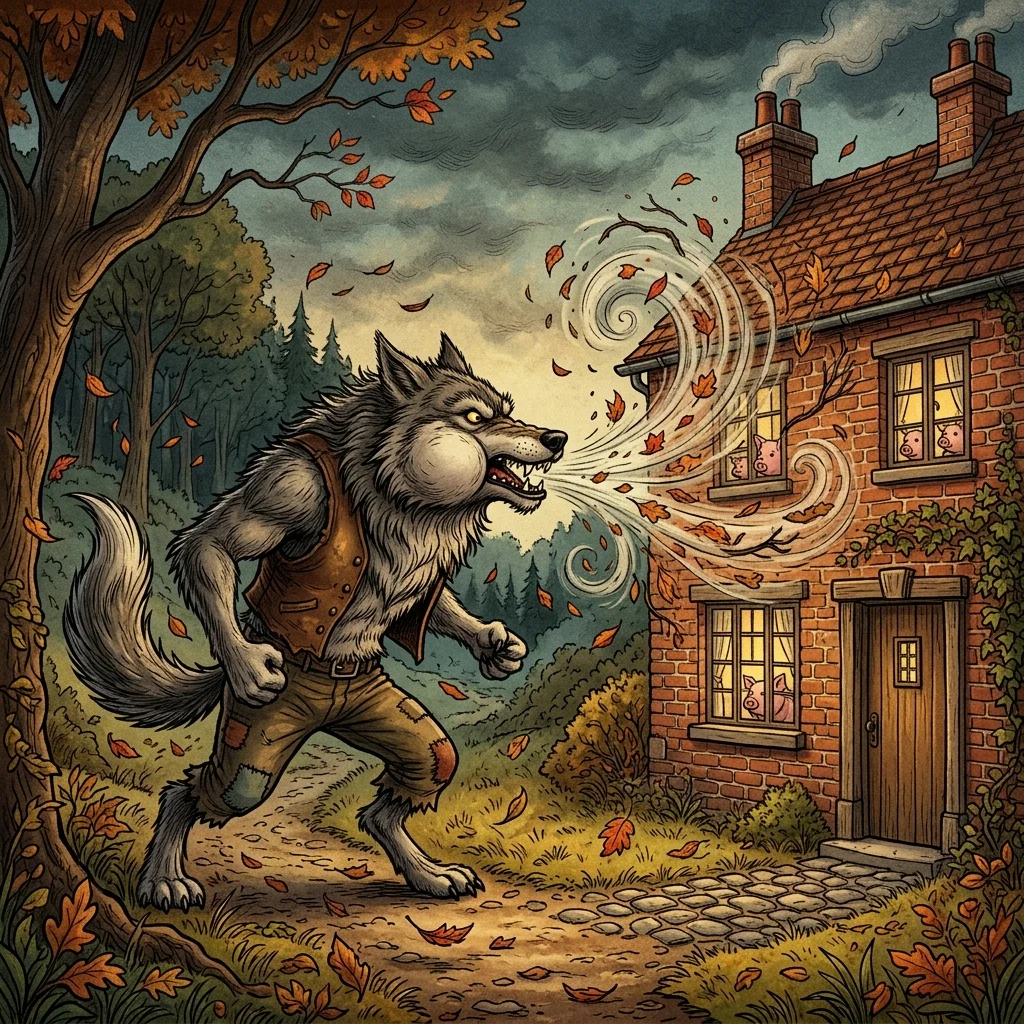
The wolf took the biggest breath of his life. He puffed out his chest and blew with all his might. The wind howled around the house. The trees bent sideways. But the bricks did not move. He tried again, blowing until his face turned purple. The house stood perfectly still.
The Chimney
The wolf was out of breath, but he was not ready to give up. He noticed the brick chimney on the roof. He climbed an old oak tree next to the house and leaped onto the shingles.
Inside, the third pig heard the heavy footsteps on the roof. He knew exactly what the wolf was planning. He grabbed a massive iron pot, filled it with water, and hung it over the roaring fire in the hearth.
The wolf slid down the dark, soot-covered chimney. He expected to land on a sleeping pig. Instead, he splashed directly into the boiling pot of water. He howled in pain, shot back up the chimney like a rocket, and ran deep into the forest, never to be seen again.
The three little pigs lived happily, and safely, ever after.
Prowlpad Reading Notes
The Three Little Pigs is one of the most durable folk tales in the Western tradition. Its origins are murky — the earliest written versions surface in the British Isles during the 1840s — but the bones of the story stretch back through an oral tradition that spans centuries. What makes it endure is not the huffing wolf or the flying straw, but the clarity of its central argument: the quality of the work you do in private determines how safe you are in public.
The three pigs are not just pigs. In animal storytelling, they function as archetypes of three approaches to life: the opportunist, the moderate, and the disciplined. The wolf, often read as an external threat, is more accurately a test of character. His true role is to reveal which pig had the integrity to prepare when no one was watching. For readers coming to Prowlpad's wider catalogue of animal fiction, this theme of quiet preparation under pressure is one that appears again and again — because it is true to how animals actually survive.