The mantra has ruled dog ownership for decades: a tired dog is a good dog. We bought automatic ball launchers. We ran five-mile routes. We did everything the fitness culture told us made for a "well-exercised" pet. And our dogs were still anxious, still reactive on the leash, still incapable of settling down in the house.
The science, it turns out, disagrees with the dogma entirely. A growing movement of animal behaviorists and enrichment trainers is now pushing back against the physical-exhaustion model — and replacing it with something the research actually supports.
When you throw a ball repeatedly for a dog, you are not calming them. You are spiking adrenaline and cortisol. You are conditioning a canine athlete. Their nervous system remains highly aroused long after the game ends — and that sustained state of high arousal is the root cause of leash reactivity, excessive barking, destructive behavior, and an inability to settle indoors.
The ball launcher is not a solution. For many dogs, it is the source of the problem.
The Slow Pet movement advocates for biological fulfillment over physical exhaustion. It shifts the focus from burning calories to engaging instincts — specifically sniffing, foraging, and chewing.
Here is why that distinction matters physiologically:
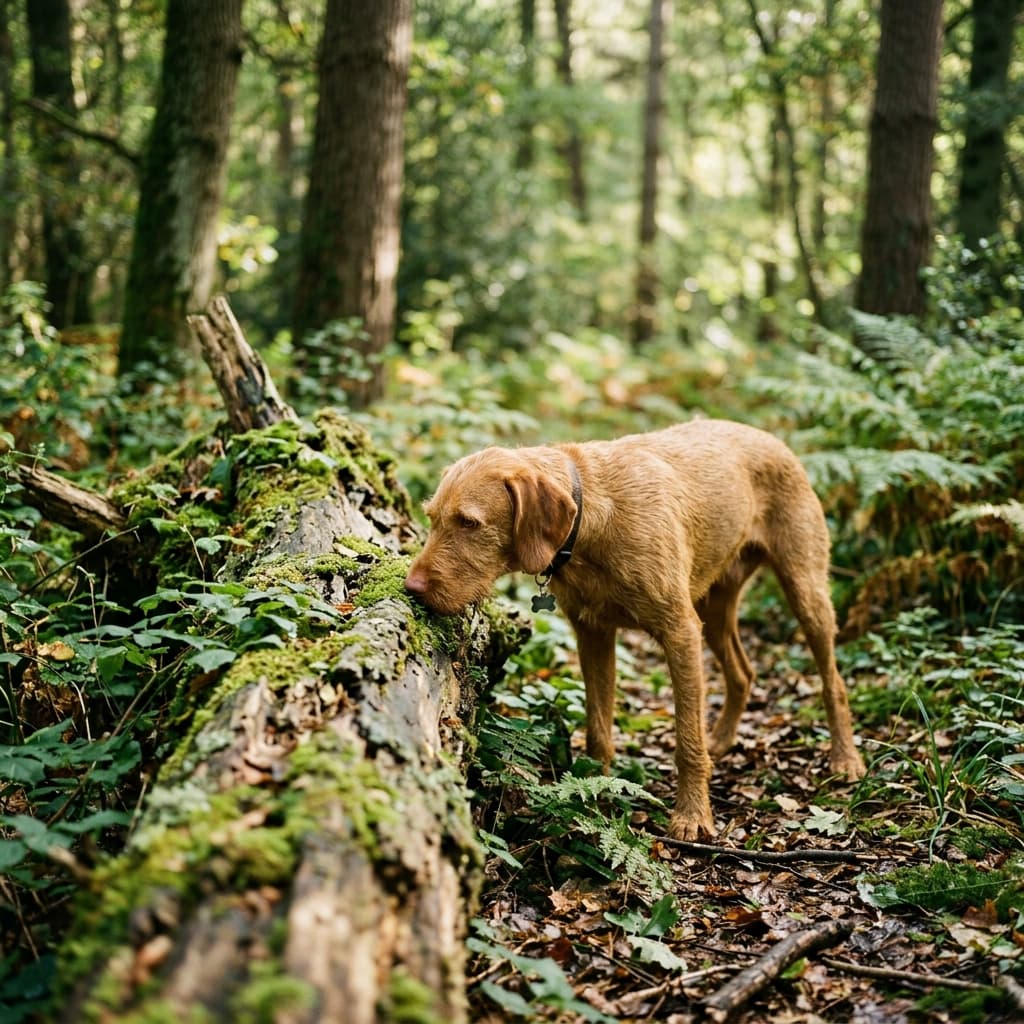
A dog's olfactory bulb is roughly 40 times larger than a human's relative to total brain size. Processing complex scent information is not a passive activity for a dog — it requires intense, sustained cognitive focus. A single tree base after rainfall can contain a full neighbourhood's worth of chemical data. Reading it is genuinely tiring work.
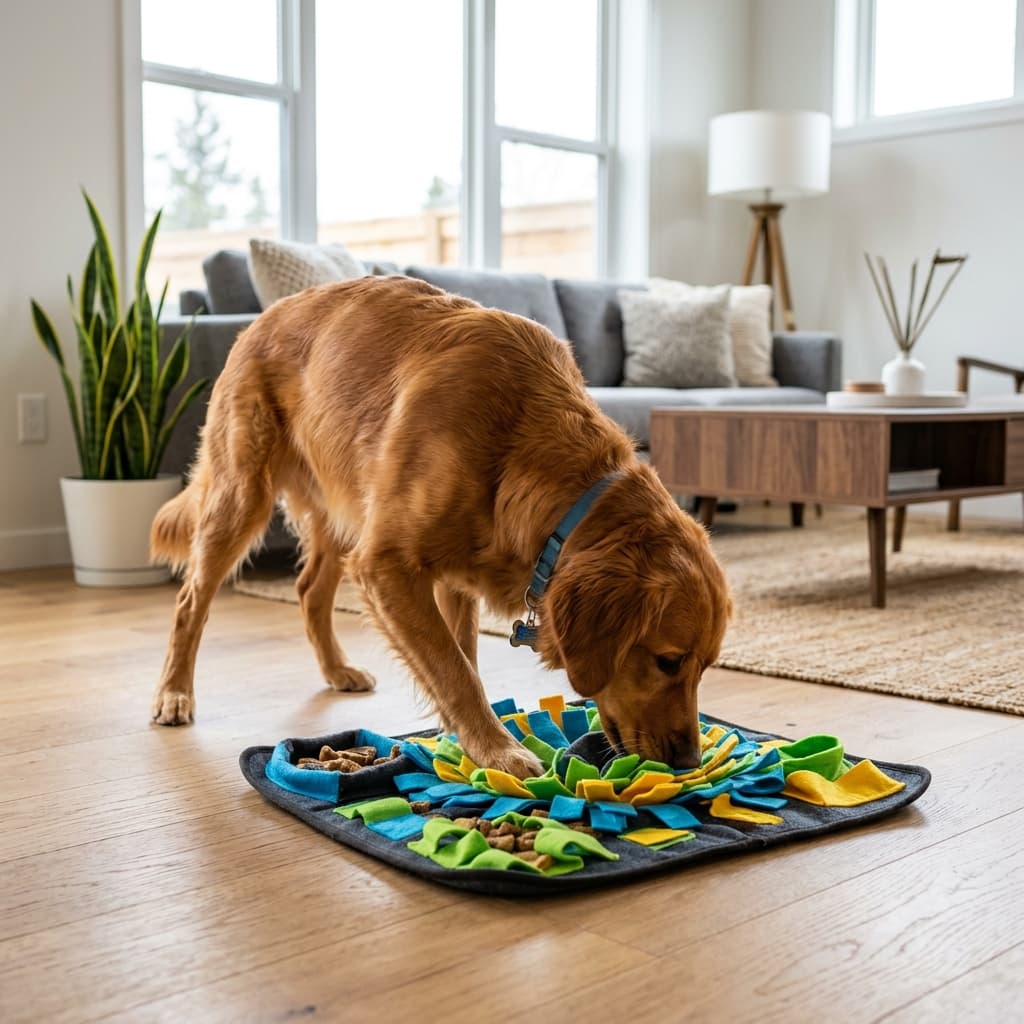
Deep sniffing causes a dog's heart rate to slow. It is not just mentally stimulating — it is a biologically calming activity. Licking and chewing release endorphins that self-soothe the nervous system. Foraging — searching for scattered food across grass or a snuffle mat — activates the dog's seeking system in a way that brings them down, not up.
Replace high-adrenaline exercise with low-arousal enrichment and you lower the dog's baseline stress level. Not for that afternoon. Permanently.
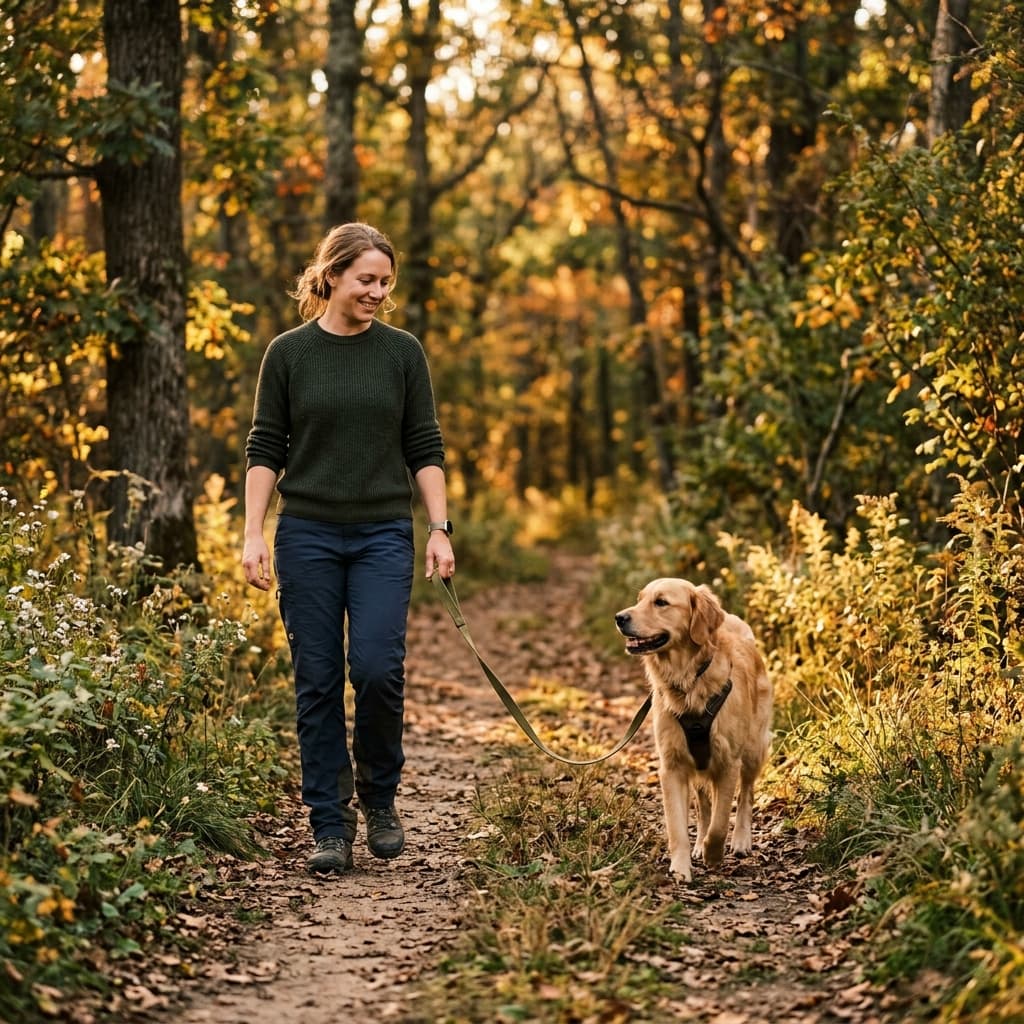
The signature practice of the Slow Pet movement is the decompression walk — called a "Sniffari" in training circles. The dog dictates the pace and direction. If they want to spend five minutes investigating a single patch of pavement, they get five minutes. You are not managing a fitness route. You are letting a creature process their world through the sense evolution built them around.
Twenty minutes of genuine sniffing exhausts a dog more thoroughly than an hour of fetch. The difference is the kind of exhaustion. One leaves the nervous system spiked. The other brings it all the way down.
1. Ditch the food bowl. Feed your dog using a snuffle mat, a lick mat, or by scattering dry kibble across the garden. Mealtime becomes a 15-to-20-minute foraging session. No training required — just scatter and watch.
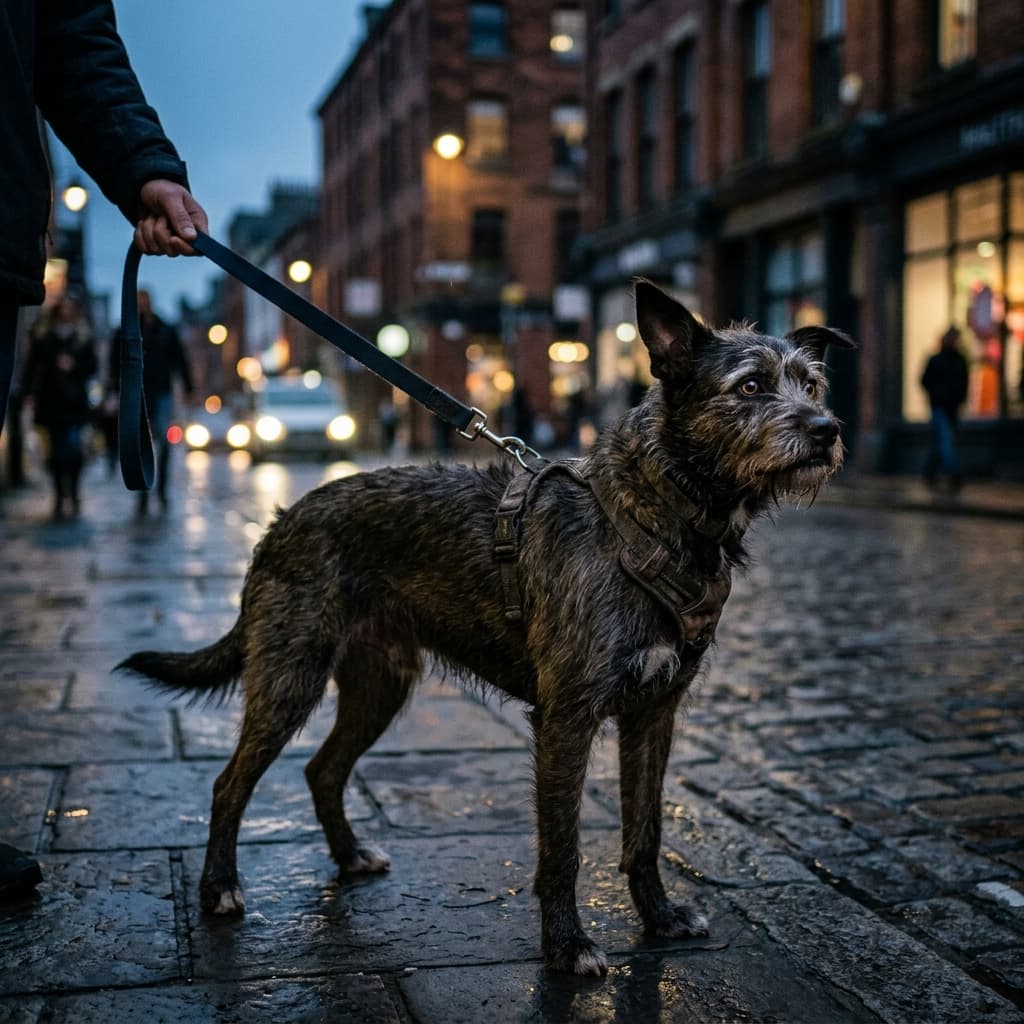
2. Change the leash. Use a long line (15 to 30 feet) in open parks instead of a tight 4-foot leash. Let the dog wander without constant tension pulling at their collar. Tension on the leash creates tension in the dog.
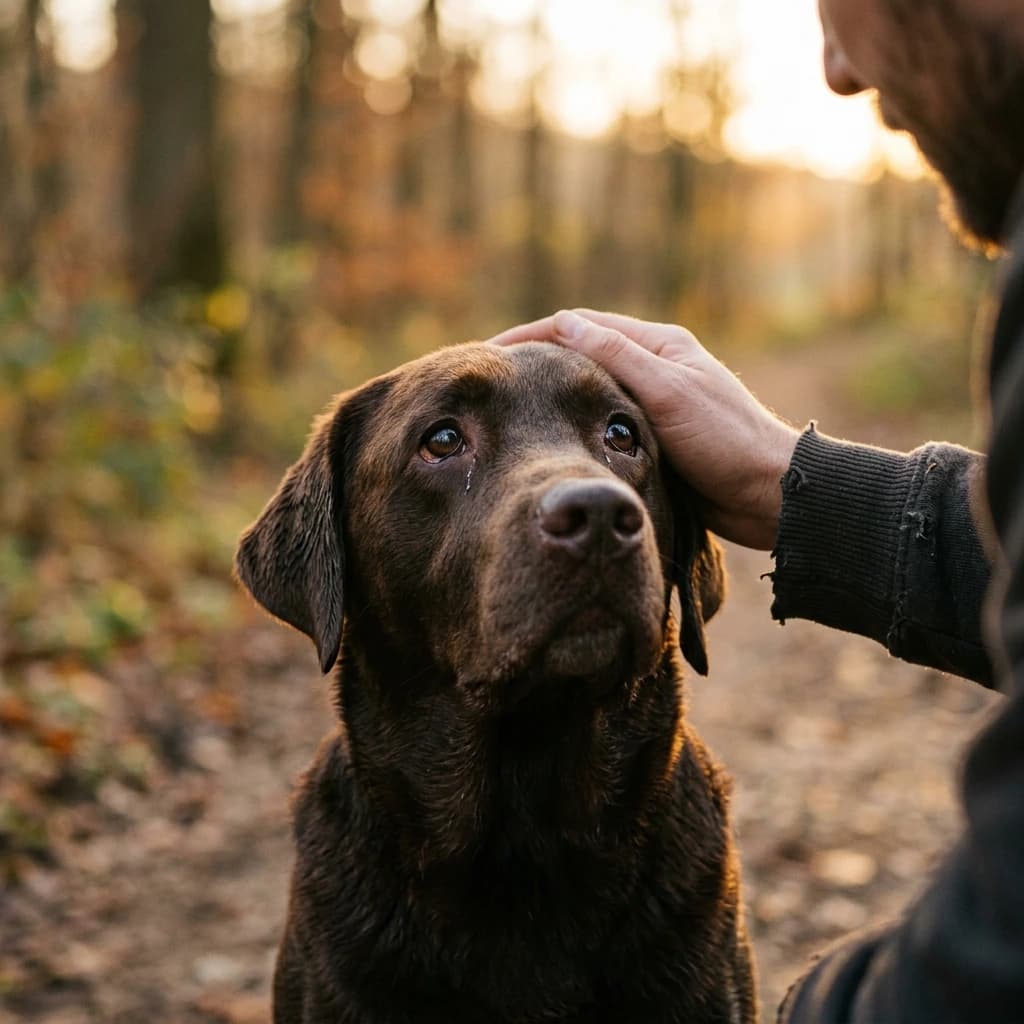
3. Pay them for doing nothing. The "capturing calmness" technique is simple: whenever your dog naturally settles without being asked, quietly drop a low-value treat between their paws. Do not say a word. Do not make eye contact. Just reward the calm state. You are teaching the dog that stillness has a return.
We have spent years over-exercising and under-enriching our dogs. The shift is not complicated. Slow down. Let them smell things. They will tell you — in the way a dog tells you anything — exactly how much that matters.
A sniffari is a decompression walk where the dog dictates the pace. The goal is environmental enrichment through scent exploration rather than physical distance.
Yes. Processing complex scent information requires intense cognitive focus. Twenty minutes of deep sniffing provides more mental exhaustion than an hour of running.
Sustained physical exercise triggers adrenaline and cortisol. Instead of calming down, your dog's nervous system is highly aroused, making it difficult to settle.
Yes. Foraging is a natural canine behavior. Licking and chewing release endorphins that self-soothe the dog, promoting calmness and reducing anxiety.
Use the capturing calmness method. Whenever your dog naturally relaxes without being asked, quietly drop a treat between their paws.