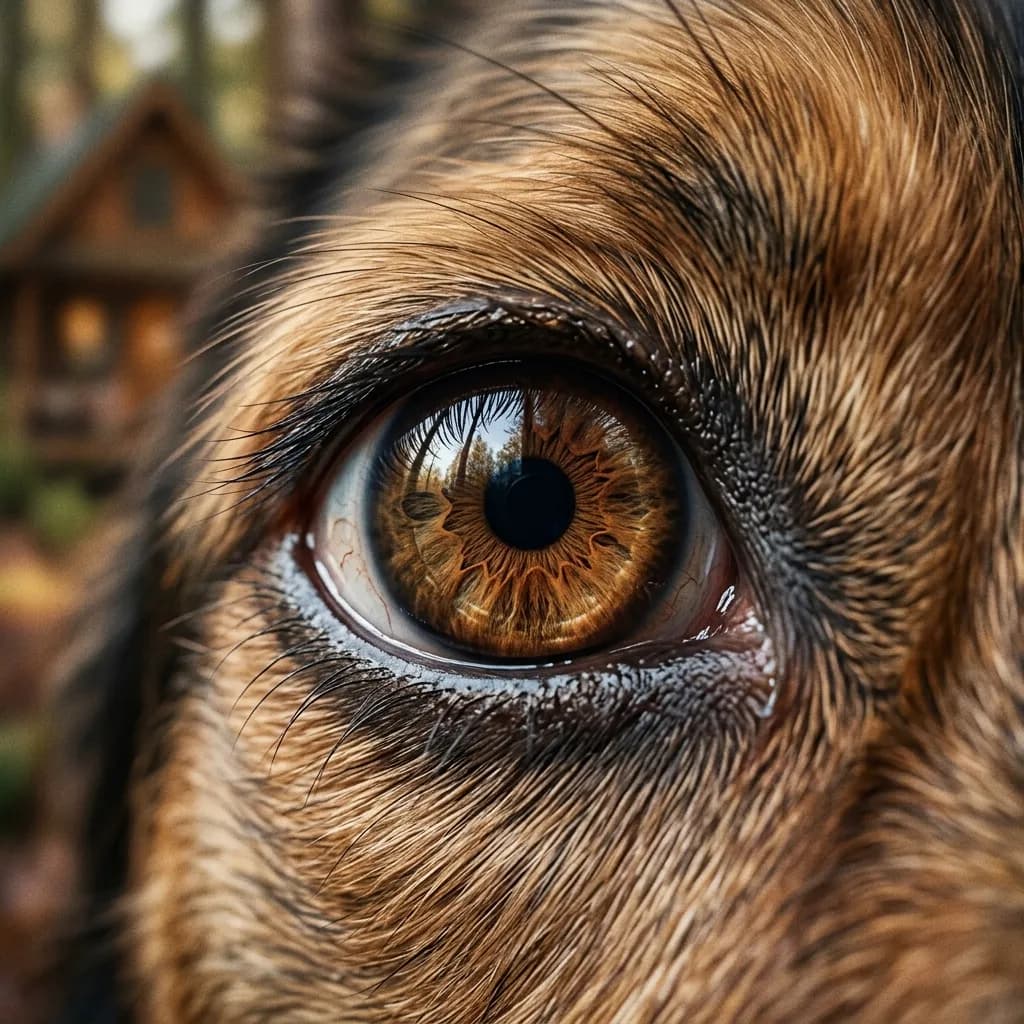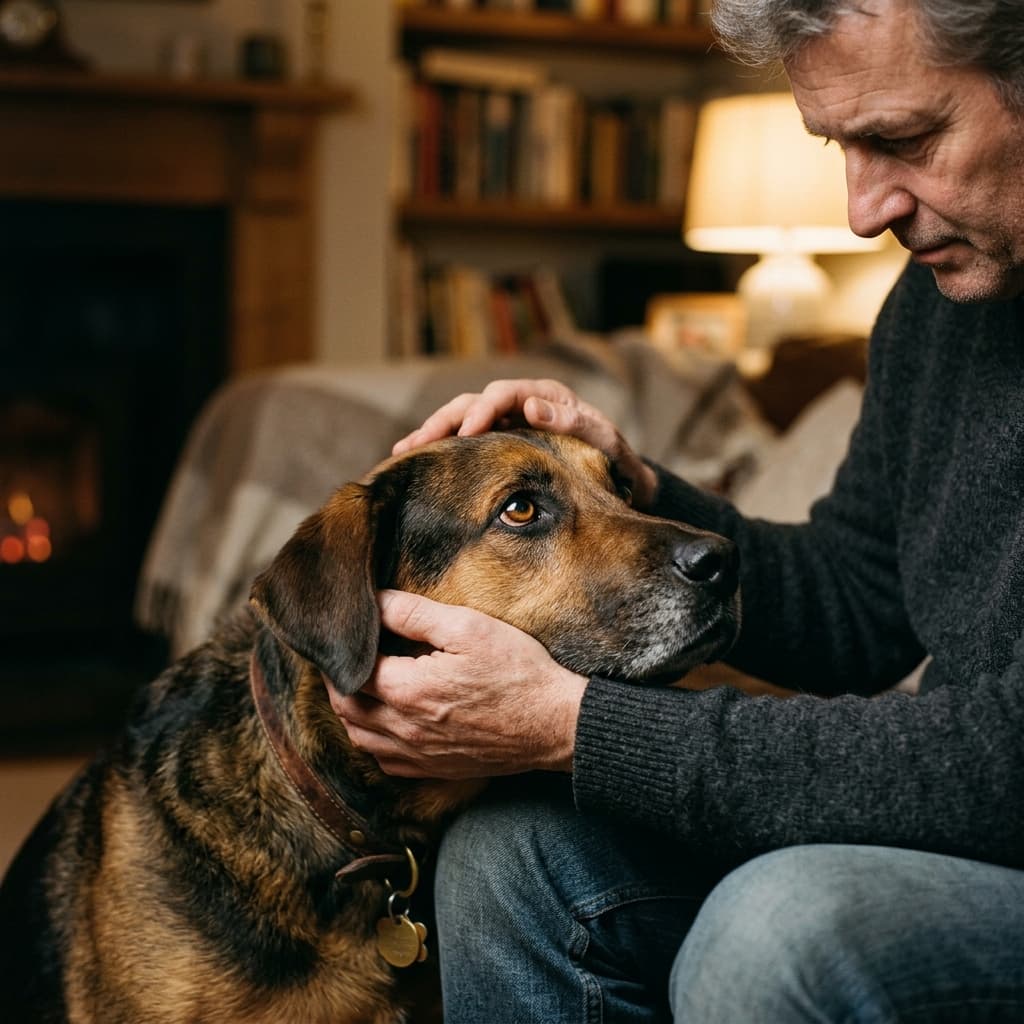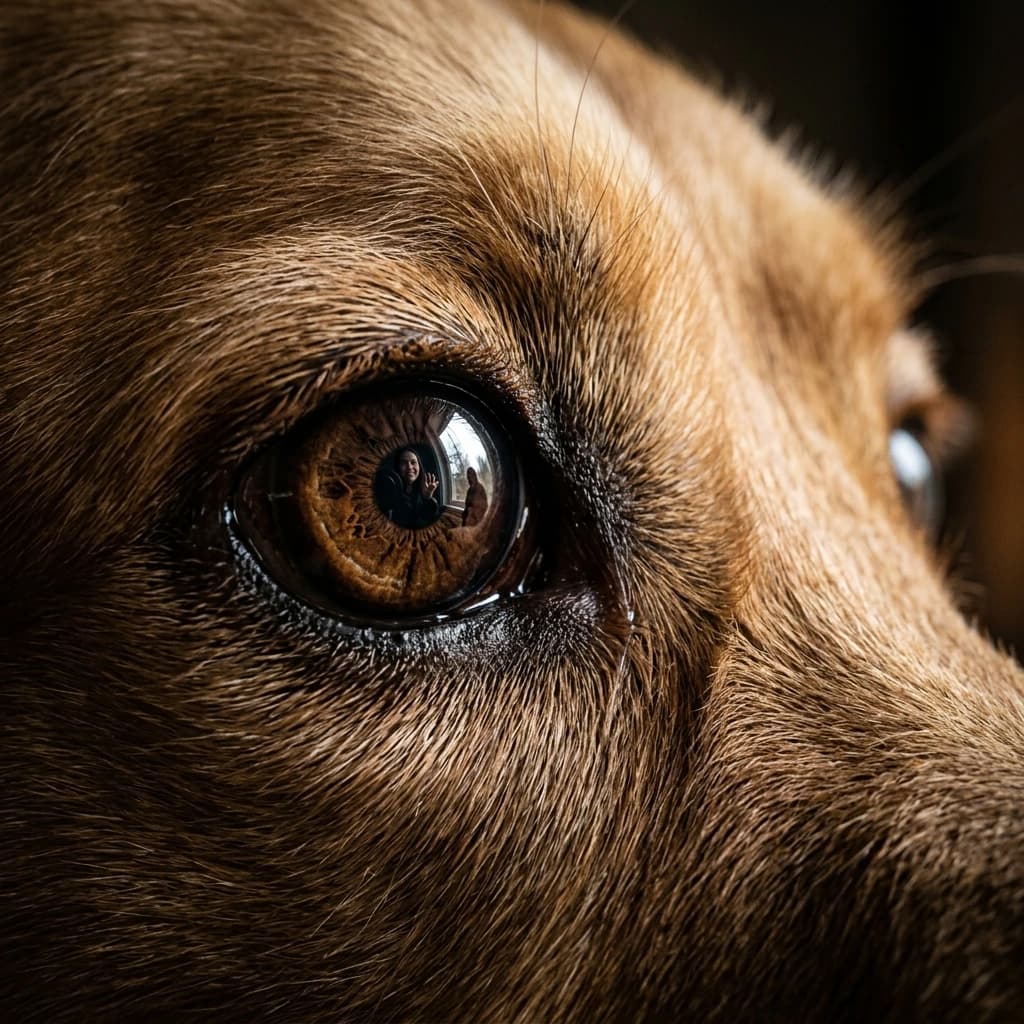
You sit down to dinner. Your dog approaches, sits down, and looks up at you. Their inner eyebrows pull upward and inward, making their eyes appear wider, rounder, and strangely human. Within five seconds, your resolve crumbles, and you offer a piece of crust from your plate.
Dog owners call it "puppy dog eyes," but to evolutionary biologists, it is one of the most astonishing examples of targeted anatomical evolution in domestic history.
Dogs did not just learn to look at us — over 30,000 years of co-living, they physically mutated their facial anatomy to communicate with the human brain.
In a landmark 2019 comparative study led by Dr. Juliane Kaminski at the University of Portsmouth, researchers dissected the facial muscle anatomy of domesticated dogs and wild gray wolves (Canis lupus).
They discovered a profound structural difference:
Domestic dogs possess a well-developed facial muscle called the levator anguli oculi medialis (LAOM). This specialized muscle is responsible for pulling the inner eyebrow corner upward.
Wild wolves lack this muscle entirely, having only sparse muscular fiber in that region.
The evolution of the LAOM muscle allowed domestic dogs to execute high-intensity eyebrow raises that accomplish two things:
Dogs that possessed the genetic mutation for this muscle triggered higher nurturing responses around early human hearths. They were fed more, protected more, and bred more — writing the eyebrow muscle directly into the species' genome.
In wild animal behavior, direct, unblinking eye contact is a declaration of threat, dominance, or hunting intent. Two wolves locking eyes is a precursor to a fight or a retreat.
Domestic dogs completely repurposed eye contact as a tool for cross-species social cooperation.
In cognitive testing where dogs and wolves are presented with an unsolvable puzzle (a locked food container):
To a dog, looking into human eyes is a social query: "I can't solve this; your turn." They are the only non-human species on Earth that naturally looks to human faces for guidance and joint problem-solving.
When a mother looks into her infant's eyes, both brains experience a measurable surge in oxytocin — the hormone responsible for social bonding, trust, and stress reduction.
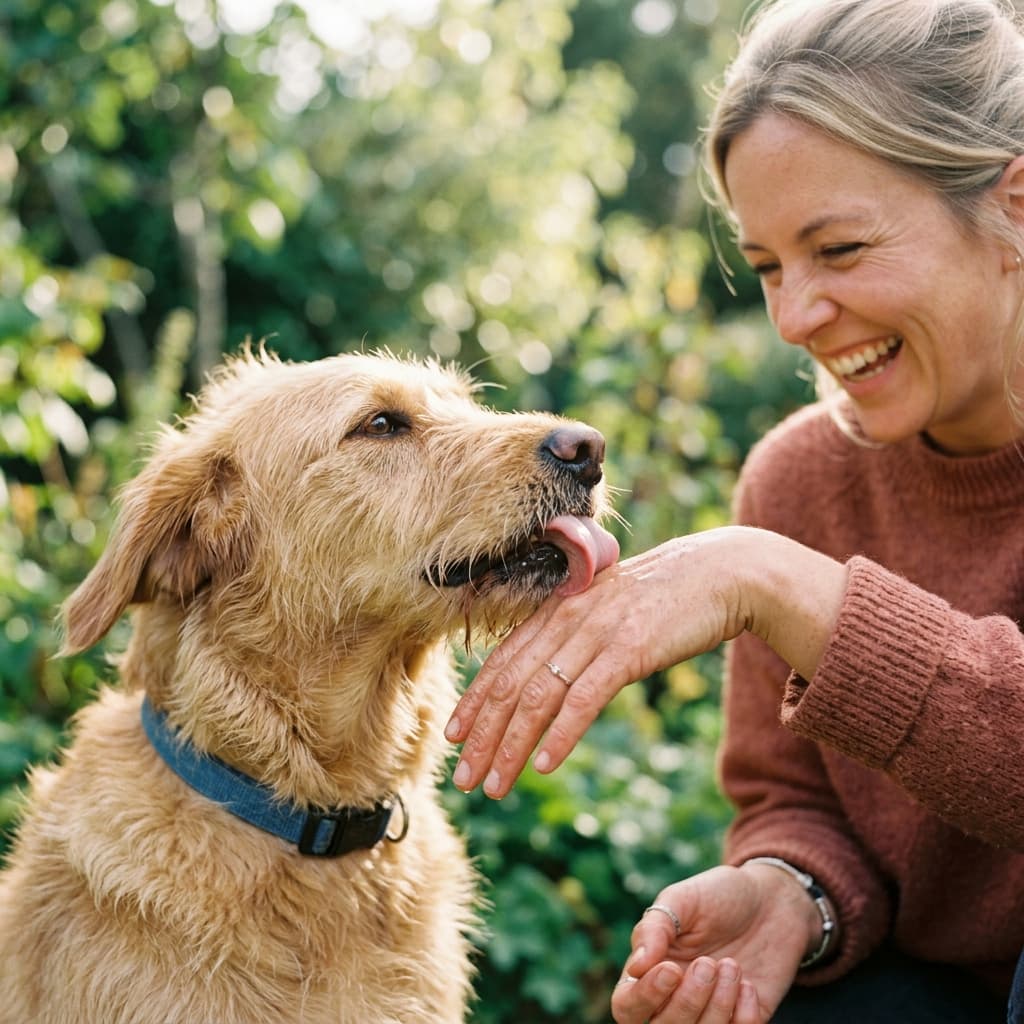
Research led by Dr. Miho Nagasawa at Azabu University proved that mutual eye contact between a dog and their owner triggers this exact same neurochemical loop.
When your dog looks into your eyes and you look back:
No other domestic animal — not cats, not horses, not tame foxes — has evolved a biological mechanism that hijacks human maternal bonding chemistry to create a self-sustaining feedback loop of affection.
Every owner knows the scene: you come home to a chewed shoe or tipped trash can, and your dog lowers their head, pulls back their ears, and gives you wide, white-rimmed eyes ("whale eye") with raised eyebrows.
Owners assume this look indicates guilt or an admission of wrongdoing. Alexandra Horowitz, head of the Dog Cognition Lab at Barnard College, ran a controlled study testing this exact behavior.
The study proved that the "guilty look" has zero correlation with whether the dog actually committed the offense. Dogs displayed the exact same expression when falsely accused by an angry owner.
The "guilty look" is not remorse. It is an appeasement display — a rapid combination of submissive body signals and infant-eye movements designed to disarm human anger and de-escalate tension.
The next time your dog looks up at you with wide, expressive eyes, recognize it for what it is: a 30,000-year-old evolutionary bridge built specifically to connect their world to yours.
Yes. Evolution gave dogs specific eye muscles to mimic human infant expressions. This physically triggers a strong nurturing response in human brains.
Unlike wolves, dogs evolved to see humans as partners. When faced with a problem, they look to us for guidance and trust to solve it.
Yes. Mutual gazing between dogs and humans releases oxytocin (the love hormone) in both species. It creates a unique cross-species bond.
No. Wolves lack the specific levator anguli oculi medialis muscle that lets domestic dogs raise their inner eyebrows.
Dogs read micro-expressions and tension in human eyelids to instantly gauge our internal states. They are excellent emotional sensors.