Dogs in fiction are generally eager to please, loyal, and heroic. Cats in fiction are entirely different: they are cynical observers, sharp critics of human absurdity, and reluctant heroes who save the day only if it happens to align with something they wanted anyway. Reading from a cat's perspective is an exercise in humility — and a surprisingly useful diagnostic tool for examining human behaviour from the outside.
The foundational text of the entire genre. Narrated by a nameless stray cat living in the household of a pompous, mediocre schoolteacher in Meiji-era Japan, this novel is a masterpiece of satirical observation. The cat has no name because his owner has never thought to give him one — which tells you everything about the power dynamic. From his perch on window ledges and bookshelves, the cat delivers devastating commentary on the pretensions of the Japanese intellectual middle class. Wickedly funny and still precise in the way it skewers social posturing.
Best for: Readers who want literary satire and do not mind a cat who is thoroughly unimpressed with everyone.
This is The Lord of the Rings for cats — and that comparison is not an exaggeration. Fritti Tailchaser, an orange tabby, embarks on an epic quest into the dark feline underworld to rescue his missing friend. Williams created a complete feline language, mythology, cosmology, and religion from scratch. The cats in this novel understand the world through scent, hierarchy, and a deep, instinctual fear of a darkness that is distinctly their own. It is a genuine feat of world-building that deserves far more attention than it gets.
Best for: Readers who want full-scale xenofiction — a world built entirely from a cat's sensory and social perspective.
Nana is a stray cat taken in by a kind man named Satoru, who is quietly dying. Before the end, Satoru drives across Japan to visit the childhood friends who shaped him, hoping to find someone to take Nana when he is gone. The narrative alternates between Satoru's memories and Nana's fiercely loyal, blunt feline perspective. It is a novel about terminal illness, friendship, and the particular stubbornness of a cat who has decided that their person is not to be abandoned. Have tissues. You will need them from about chapter three.
Best for: Readers who want to be emotionally destroyed in a very specific and beautiful way.
A cozy mystery series running to 29 novels. The human protagonist is Jim Qwilleran, a newspaper reporter with an impressive moustache. The actual detective is Koko, a Siamese cat with a documented ability to identify murderers by knocking specific books off shelves, sniffing out inconsistencies, and staring at people with a quality of focused attention that makes them confess things they had no intention of confessing. The series is comfort reading at its best — and Koko is a genuinely satisfying fictional detective.
Best for: Readers who want cozy mysteries where the cat actually solves the crime.
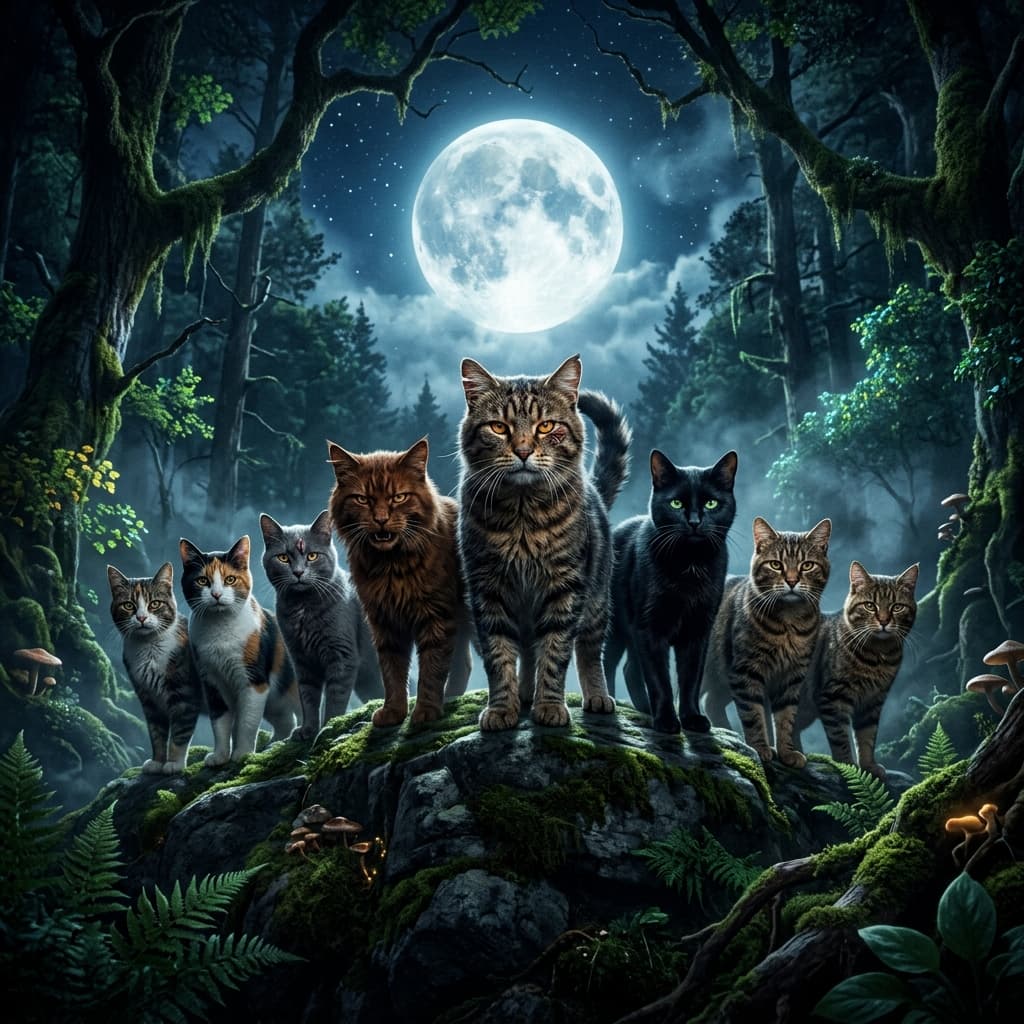
You cannot discuss cat fiction without accounting for the Warriors phenomenon. Rusty is a house cat who leaves his comfortable suburban life to join a society of feral warrior cats living in the forest, organized into four warring Clans with their own code of law, spiritual cosmology, and political history. The first book is the entry point into one of the most elaborately world-built series in modern animal fiction — over 100 books deep and still ongoing. It is technically middle-grade fiction. It reads like adult epic fantasy.
Best for: Readers who want to understand why 90 million copies of a series about feral cats have been sold worldwide.
Feline protagonists are not warm narrators. They are precise, self-interested, and occasionally ruthless — which is exactly what makes them effective literary devices. Do not expect the unconditional warmth of a dog-perspective novel. Expect something sharper: a narrator who notices everything and judges some of it, and whose eventual displays of loyalty land that much harder precisely because they were never guaranteed.
The best cat fiction does not ask you to love cats. It asks you to take them seriously as subjects — as creatures with their own perceptual world, their own social logic, and their own reasons for doing what they do. Every novel on this list earns that ask.
I Am a Cat by Natsume Sōseki is historically the most famous, setting the standard for feline satire in literature.
Yes. Tailchaser's Song and the massive Warriors series are epic high-fantasy novels featuring complex feline societies and mythologies.
Cats make perfect objective narrators. They live inside our homes and see our most private moments, but remain emotionally detached enough to offer sharp, unbiased commentary.
Yes. It is a profoundly moving story about terminal illness, loyalty, and the bond between a man and a rescued stray cat.
It depends. In fantasy books like Warriors, cats speak to each other. In contemporary books like I Am a Cat, the cat narrates internally but cannot speak human language.