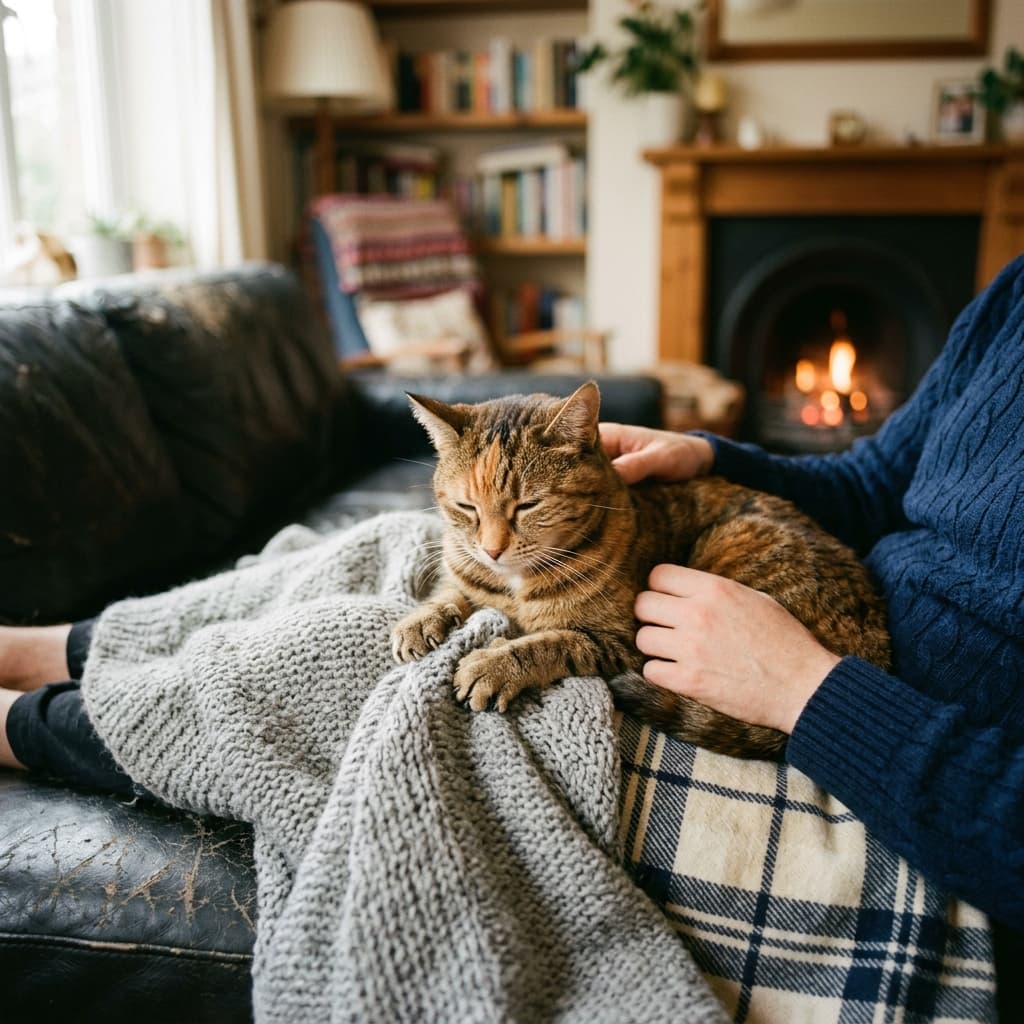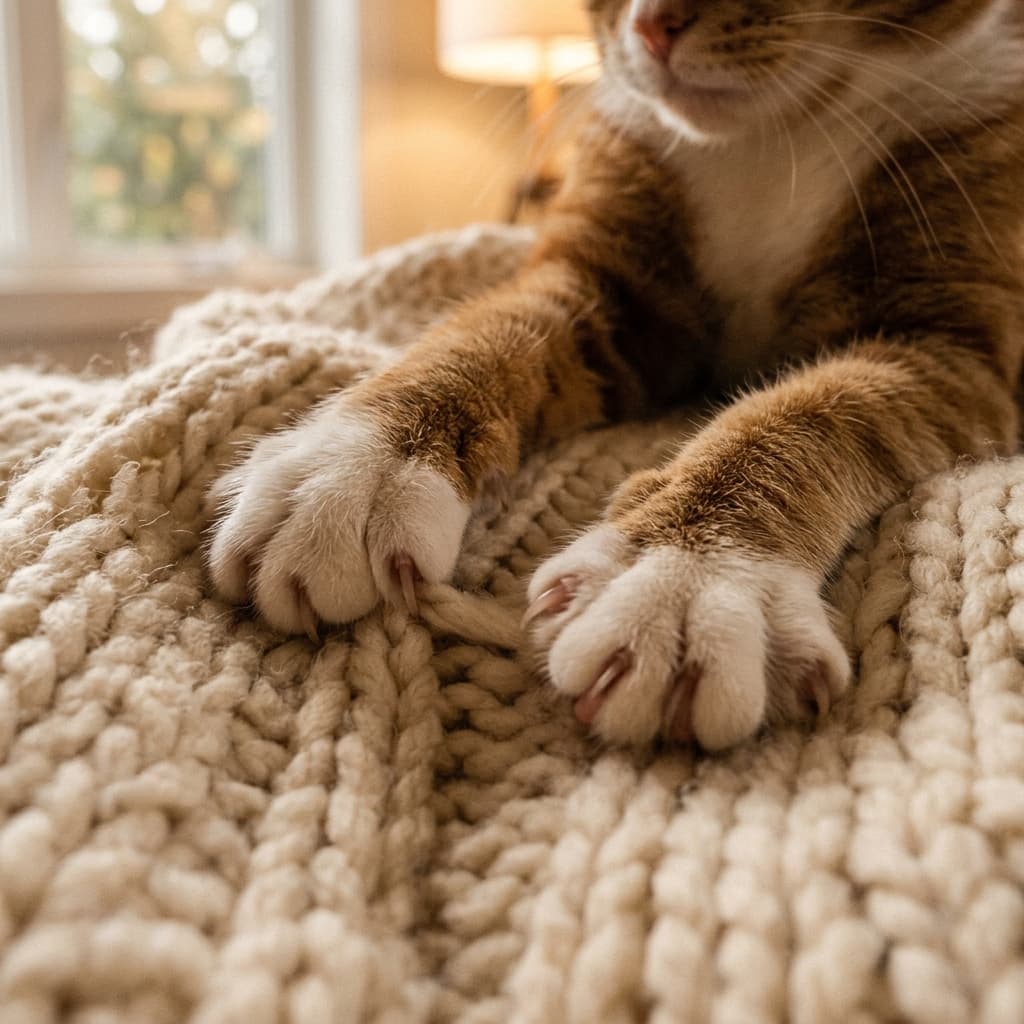
They climb onto your lap, eyes half-closed, purr engine revving softly. Then the paws start moving in a steady, rhythmic push-pull: left, right, left, right. Claws extend slightly on the downward press and retract on the pull back. Cat owners affectionately call it "making biscuits," but to an animal behaviorist, it is one of the most intriguing windows into feline neurobiology and domestication history.
Why does an adult cat — who eats dry kibble and sleeps on a memory foam bed — still engage in a motor pattern built for a newborn kitten?
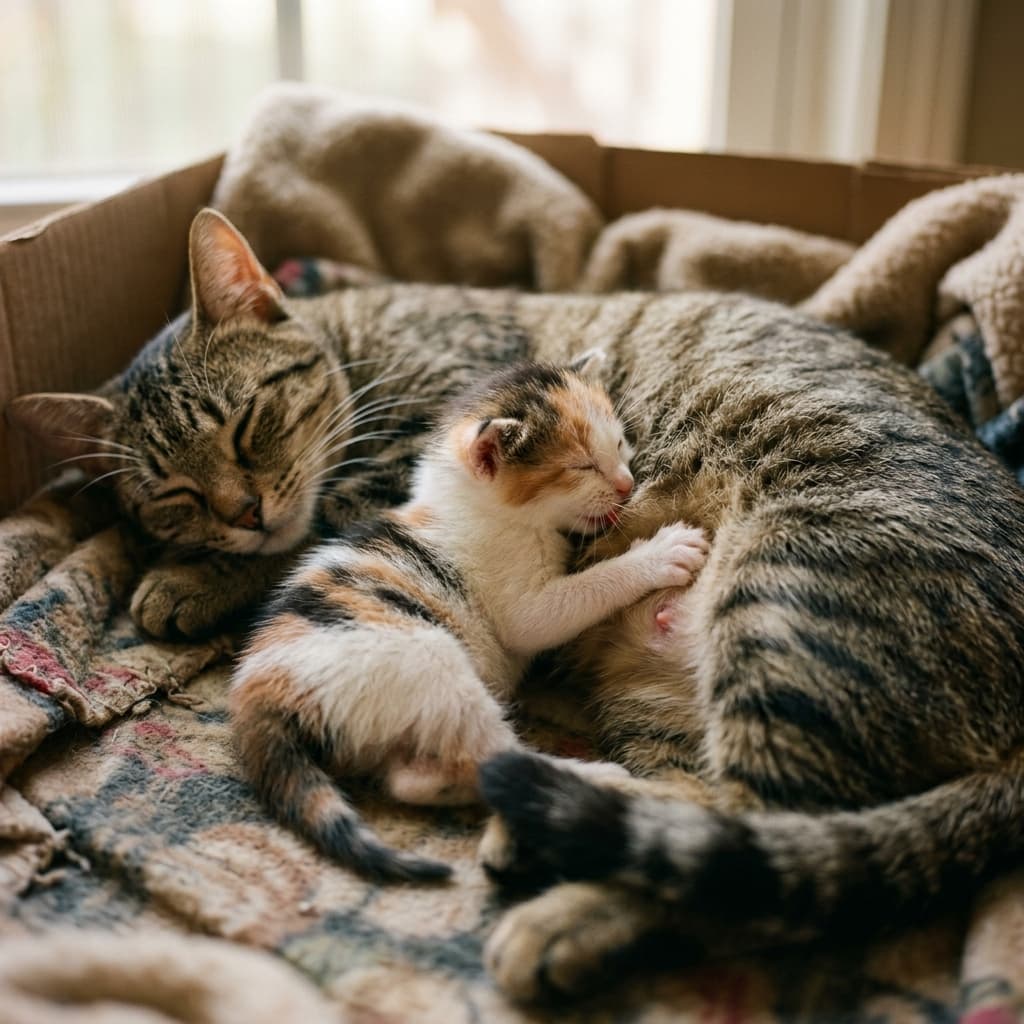
Kneading begins literally minutes after birth. Newborn kittens are born blind, deaf, and functionally helpless, but they possess a set of hardwired brainstem reflexes essential for survival.
When a kitten crawls toward its mother's belly, its paws naturally push against the mammary tissue surrounding a teat. This alternate pressing motion serves two vital biological purposes:
Kittens who knead vigorously get more milk, gain weight faster, and survive at higher rates. The motor pattern is encoded deep in the feline nervous system as a fundamental survival mechanism.
In wild felids like bobcats or cougars, kneading disappears almost entirely once a kitten is weaned and begins hunting live prey. In domestic cats, however, the behavior persists throughout adulthood.
The biological explanation for this is neoteny — the retention of juvenile physical and behavioral traits into adult life.
Domestication is effectively a process of selective breeding for neoteny. Over thousands of years, humans selected cats that remained affectionate, approachable, and socially attached to their human caretakers. In doing so, we inadvertently preserved juvenile neurological pathways. When your five-year-old cat kneads your lap, they are accessing the exact neurological state associated with the warmest, safest, and most nourished period of their early life. To your cat, you are functionally an enormous, non-feline mother figure.
Far from being a harmless leftover habit, adult kneading serves distinct biological and psychological functions:
Kneading triggers a measurable surge of endorphins and oxytocin in the adult cat. You will often see cats enter a near-trance state while making biscuits — eyes half-closed, purring loudly, and occasionally drooling. This drooling is not a medical issue; it is a direct parasympathetic nervous system response, identical to a nursing kitten anticipating milk.
Cats rely on a complex chemical vocabulary. On the underside of their paw pads, between the toes, lie specialized interdigital scent glands. As a cat presses their paws into your blanket, shirt, or lap, these glands deposit microscopic pheromone signatures. They are quite literally stamping the surface with a chemical marker that reads "safe territory."
Before domestic couches, wild feline ancestors slept in tall grass, brush, and fallen leaves. Before settling down, a wild cat would tread heavily on vegetation to pack down sharp stalks, clear out hidden insects or snakes, and shape a soft, insulated depression. The kneading motion on your duvet is an echo of this ancient nesting ritual.
Some cats — particularly oriental breeds like Siamese and Tonkinese, or cats weaned earlier than eight weeks — suckle or bite on soft fabrics like fleece or wool while kneading.
This behavior, known as wool sucking, is an intensified expression of the nursing reflex. It is rarely harmful unless the cat ingests fabric threads (which can cause intestinal blockages). In most cases, it is simply a deeper regression into kittenhood self-soothing during moments of profound relaxation.
Because kneading involves claw extension, a moment of feline affection can quickly turn painful. How you handle it matters immensely for the bond you share.
The next time your cat climbs onto your chest and starts making biscuits, don't think of it as a quirky habit. It is a 10,000-year-old compliment — a living bridge between wild survival instincts and domestic companionship.
This behavior, called wool sucking, often occurs in cats weaned too early. Biting or suckling on soft fabrics mimics nursing and provides intense comfort.
Cats knead people they feel completely safe with. They may view you as their primary caregiver or simply prefer the texture of the clothes you wear.
Yes. Because kneading is a self-soothing behavior, cats sometimes do it to calm themselves down in stressful situations, much like a human biting their nails.
Both purring and kneading originate from kittenhood nursing. Doing them together signals maximum contentment, relaxation, and feelings of safety.
Use specialized cat nail clippers to snip only the sharp, translucent tip of the claw, avoiding the pink quick. A scratch pad can also help dull their claws.