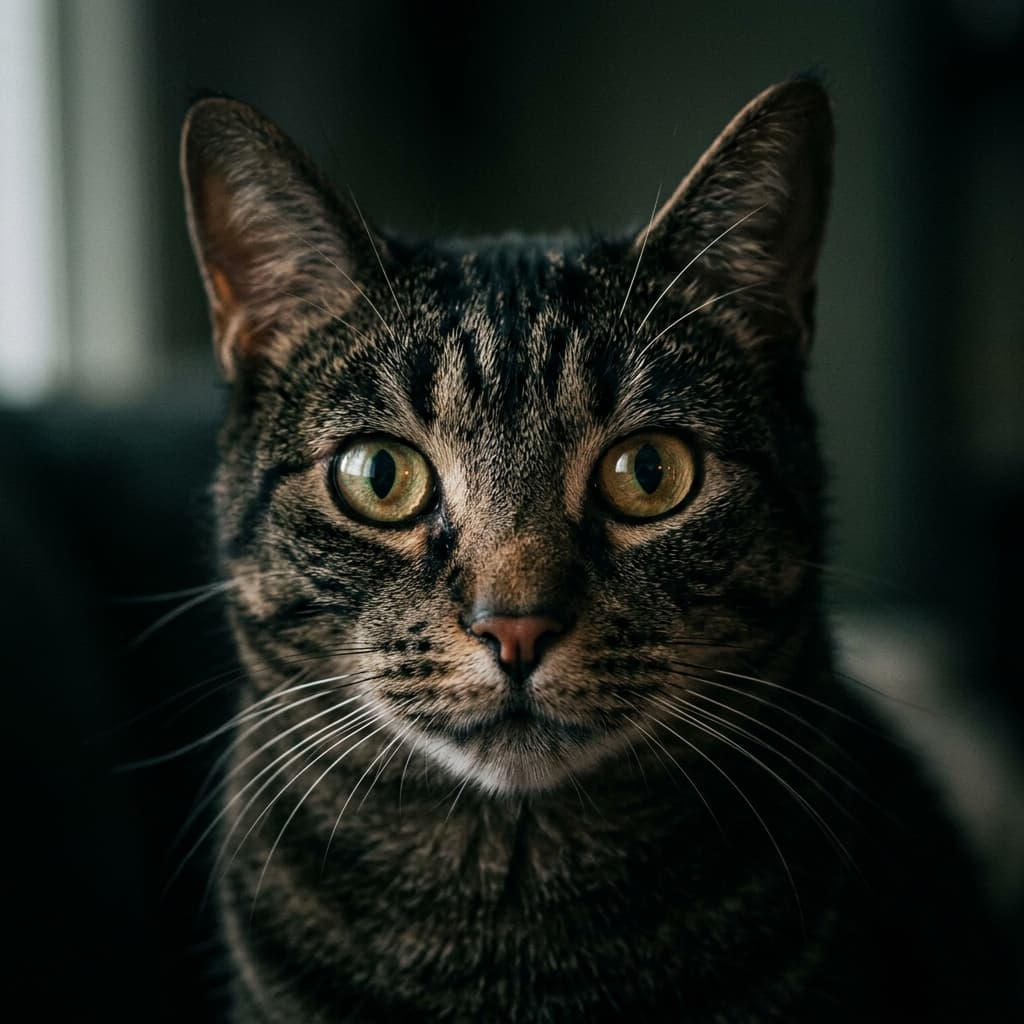
Your cat is sitting on the bookshelf across the room, staring at you with the intensity of someone who remembers a grudge from six years ago. They have not blinked in what feels like three minutes. You are starting to feel judged.
Here is what is actually happening — broken down into the five specific reasons cats use that unblinking gaze.
The most common reason is the simplest: your cat wants something, and staring at you is the most effective tool they have discovered to get it. Cats are fast learners of cause and effect. They have noticed that fixed eye contact eventually causes the biped across the room to get up and walk toward the kitchen. If it is anywhere near their regular mealtime, or if they are positioned near their bowl, the mystery is solved. You are not being watched. You are being managed.
What to do: Check the clock. If dinner is due, serve it. If it is not, ignore the stare — responding to it outside of scheduled times trains them to demand-stare all day.
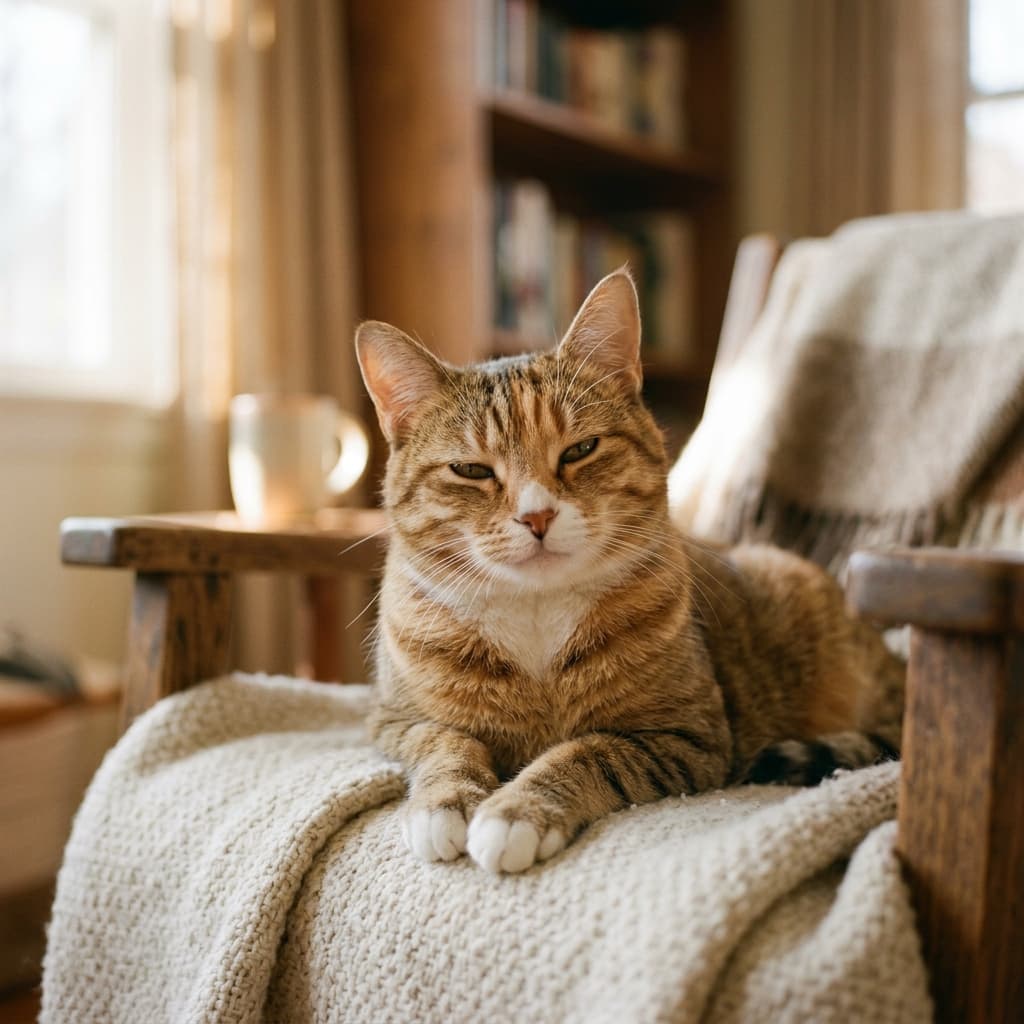
If your cat is staring at you with soft, half-open eyes and then slowly closes and reopens them — stop what you are doing. You have just received a feline kiss. A 2020 study from the Universities of Sussex and Portsmouth confirmed that the slow blink is a genuine signal of positive emotional communication. In a species where closing your eyes in the presence of another animal is the ultimate display of trust, a slow blink directed at you is about as affectionate as cats get.
What to do: Return it. Soften your eyes, hold the gaze, and blink back slowly. The same study found that cats are significantly more likely to approach a human who returns the slow blink.
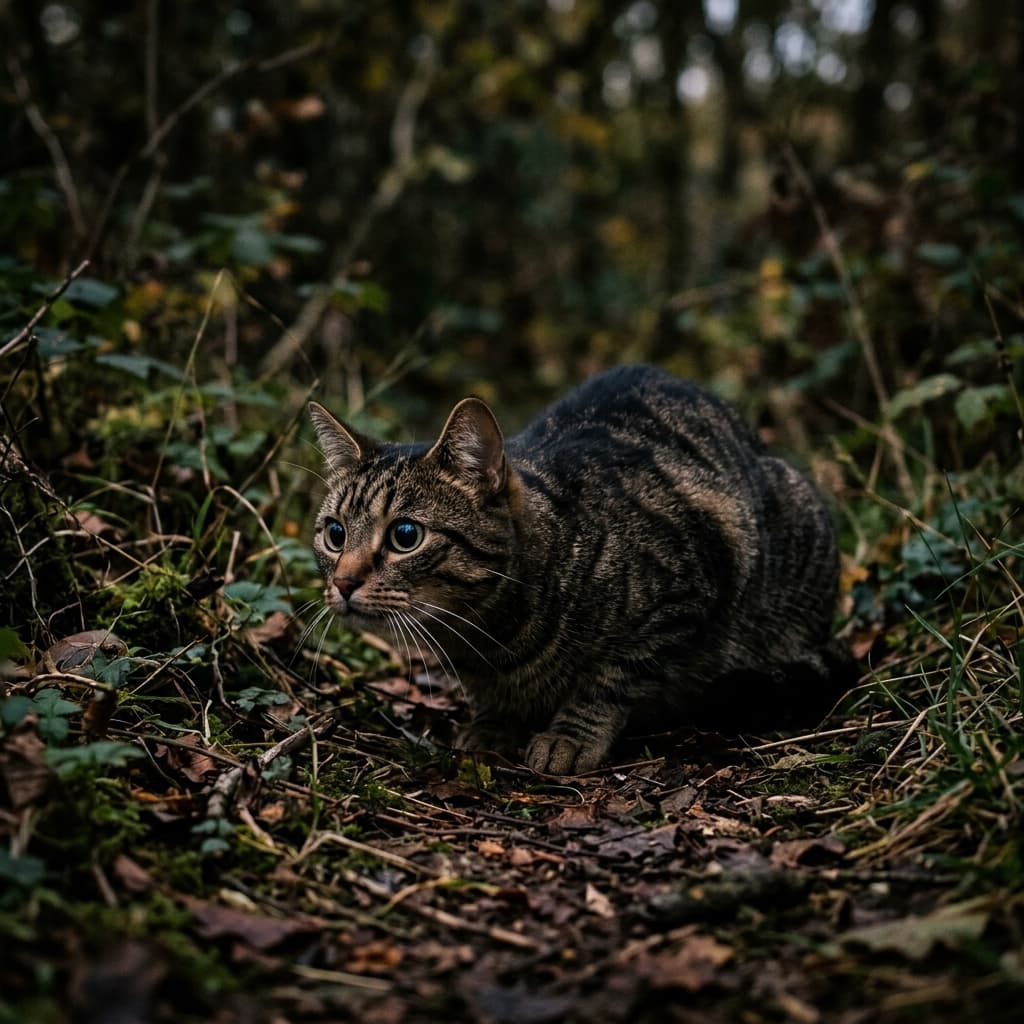
Wide eyes. Dilated pupils. Body low and still. If you see those three things together, your cat is not staring at you — they are staring through you. A fly on the wall, a shadow shifting, a sound from the next room — something has triggered their predatory tracking system. Their brain is calculating distance and trajectory. You happen to be in the way.
What to do: Do not reach out to pet them. Their reflex system is fully primed for striking. Look behind you, identify the target, and step aside.
A stare that comes with flattened ears, a tucked tail, or a low crouched posture is not aggression — it is fear. Your cat is watching you because you are the most predictable thing in an environment that currently feels threatening. They are using you as a reference point. Has the human gone tense? Should I run?
What to do: Do not approach, do not make prolonged eye contact, and do not make sudden movements. Look away to signal you are not a threat. Give them space to retreat on their own terms.
Not every stare has a dramatic explanation. Cats are intensely curious about their environment, and you are the most variable element in it. If you do something out of the ordinary — rearrange furniture, crack open a bag, stand in a room you do not usually stand in — expect an audience. The unblinking gaze is simply their version of leaning in to look at something interesting.
What to do: Nothing. Let them watch. This is a compliment in its own way.
Do not win a staring contest with a tense cat. Holding direct, unbroken eye contact when a cat is already anxious or overstimulated is a primate dominance signal — and to a cat, it reads as an incoming attack. If a stare is accompanied by stiff posture, a twitching tail, or flattened ears, look away first. Losing the contest keeps everyone calm.
Your cat stares at you because you are the most important thing in their controlled environment. You control the food, the warmth, and the level of chaos. Learning to tell a hunger stare from a slow blink from a predatory lock changes every interaction you have with them.
Cats are crepuscular, meaning they are most active at dawn and dusk. They stare at you while you sleep because they are awake, bored, and waiting for you to wake up and interact.
Cats have exceptional hearing and vision. When they appear to stare at nothing, they are likely tracking a tiny insect or listening to a high-frequency sound in the walls.
A direct, unblinking stare is considered a sign of aggression. If you stare back, always soften your eyes and blink slowly to show you are not a threat to them.
In the wild, eliminating leaves an animal vulnerable to predators. Your cat stares at you to make sure you are standing guard and keeping them safe while they are defenseless.
Dilated pupils indicate high arousal. This can mean fear, excitement, or predatory focus. Look at the rest of their body language to determine the exact emotional cause.