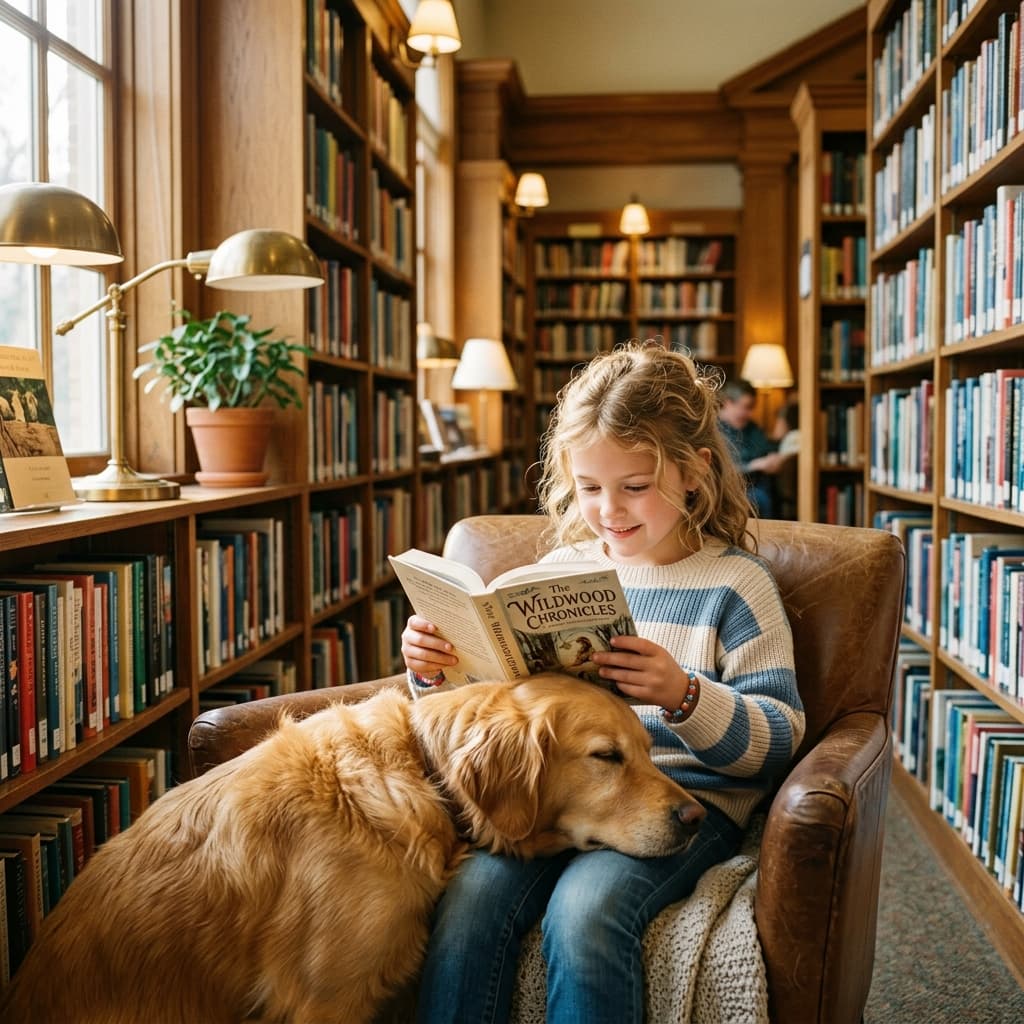
Across the world, library programs place "reading dogs" in quiet corners with children who struggle with literacy. A child sits on a beanbag and reads an entire chapter book aloud to a Golden Retriever who lies there, eyes half-closed, tail giving occasional slow thumps. It looks like magic. But what is the dog actually experiencing?
Your dog does not know if the hero escaped the dragon or if the farm was saved. Canine language processing is highly specialized: a typical trained dog recognizes between 80 and 165 specific spoken words — almost exclusively action cues like "sit," "outside," or "ball." When you read a paragraph of prose, 99% of the vocabulary passes through their auditory cortex without lexical meaning. They are not following a narrative arc.
Dogs don't care about vocabulary because they are reading something far richer: your neurological state.
Neurological brain scans reveal that dogs process human language across two distinct hemispheres:
When a human reads aloud, their vocal pattern shifts dramatically compared to conversational speech. Reading creates a steady, rhythmic, low-frequency acoustic cadence. Your breathing slows down. Your heart rate stabilizes. To a dog, this acoustic pattern is a continuous broadcast of safety and low arousal.
1. Parasympathetic Synchronization for the Dog: Sitting near a human who is producing a low, rhythmic vocal stream lowers a dog's heart rate and cortisol levels. It is a biological calming mechanism. In wild canids, quiet group vocalizations and shared resting moments serve to down-regulate pack stress after a hunt. Reading aloud replicates this exact pack-soothing signal.
2. The Non-Judgmental Mirror for the Child: Why do children with reading anxiety perform so dramatically better around dogs? Human adults react to mispronounced words with micro-expressions of tension, correction, or patience — all of which an anxious child picks up on instantly. A dog responds exclusively to the child's physical presence and voice. They don't correct. They don't interrupt. They just settle. That total absence of evaluation creates an emotional sanctuary where the child's brain can process text without threat.
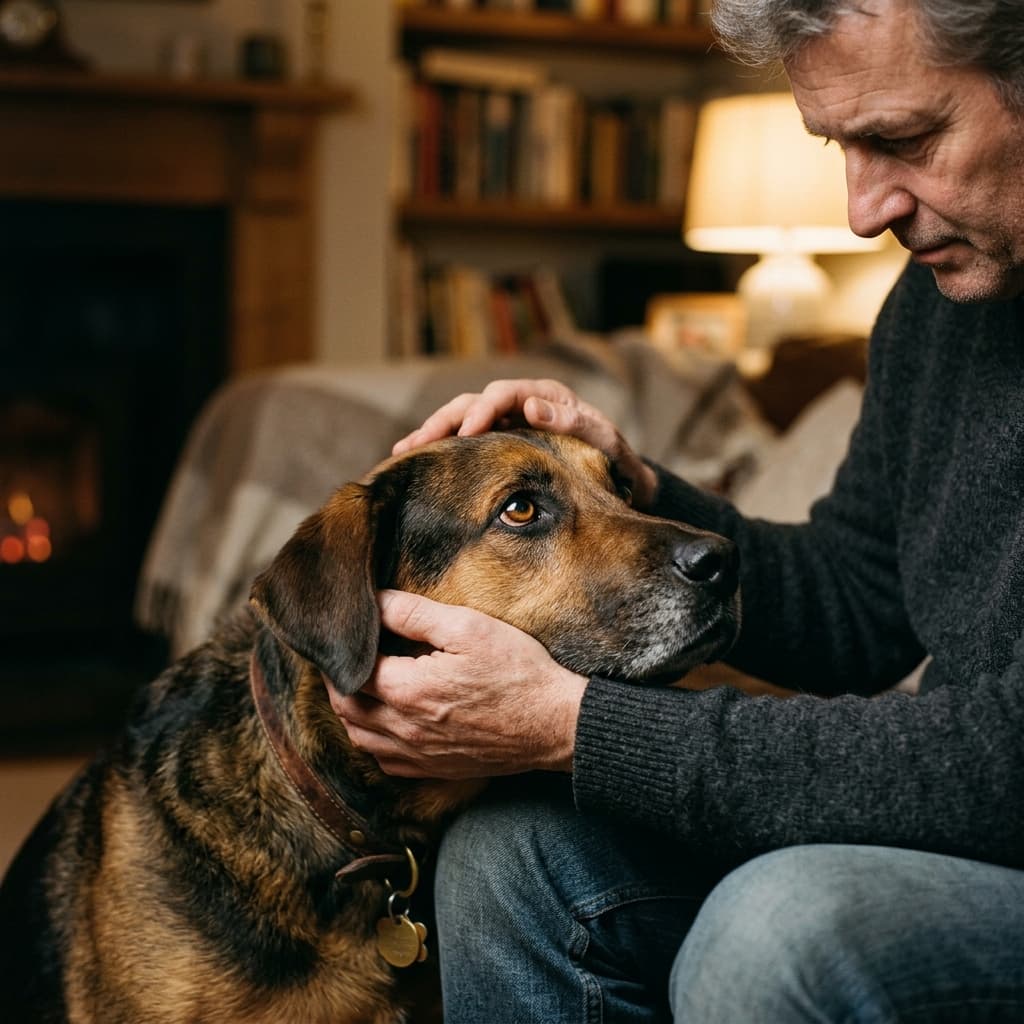
You don't need a child or a library to use this mechanism. If your dog suffers from thunderstorm anxiety or fireworks distress:
Your dog won't ever ask how the story ended. But as long as you keep reading in that steady, quiet voice, they will happily stay right where they are — anchored in the calmest room in the house.
No. Dogs do not understand narrative plot or complex vocabulary. They only understand the emotional tone and rhythm of the reader's voice.
The steady, rhythmic cadence of reading aloud signals safety. It triggers the dog's parasympathetic nervous system, allowing them to relax completely and sleep.
Yes. Studies show that children who read to dogs significantly improve their reading fluency because the dog provides a stress-free, non-judgmental environment.
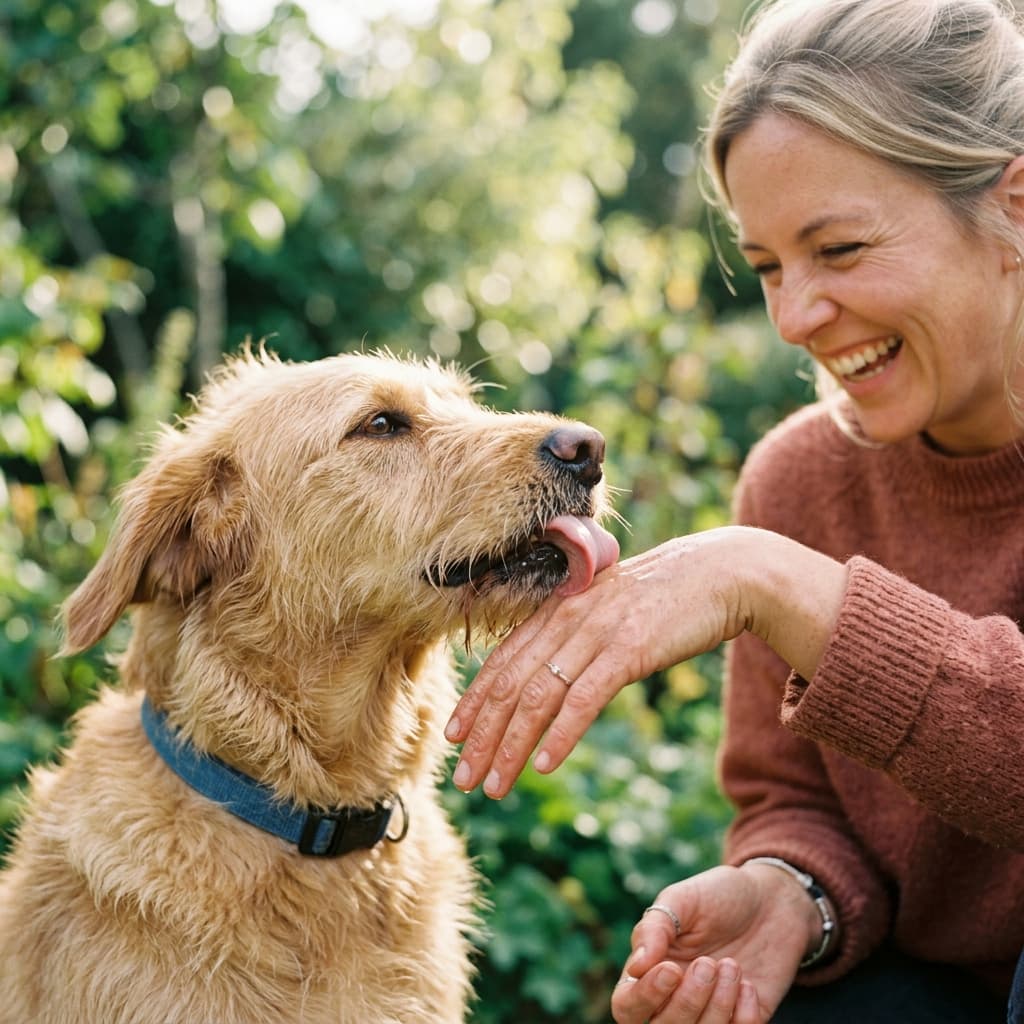
Yes. Dogs are highly social and thrive on human interaction. Directing your voice at them makes them feel included in the social group.
A low-pitched, slow, steady murmur is the most effective tone for calming an anxious dog, as it mimics the resting sounds of a safe pack.