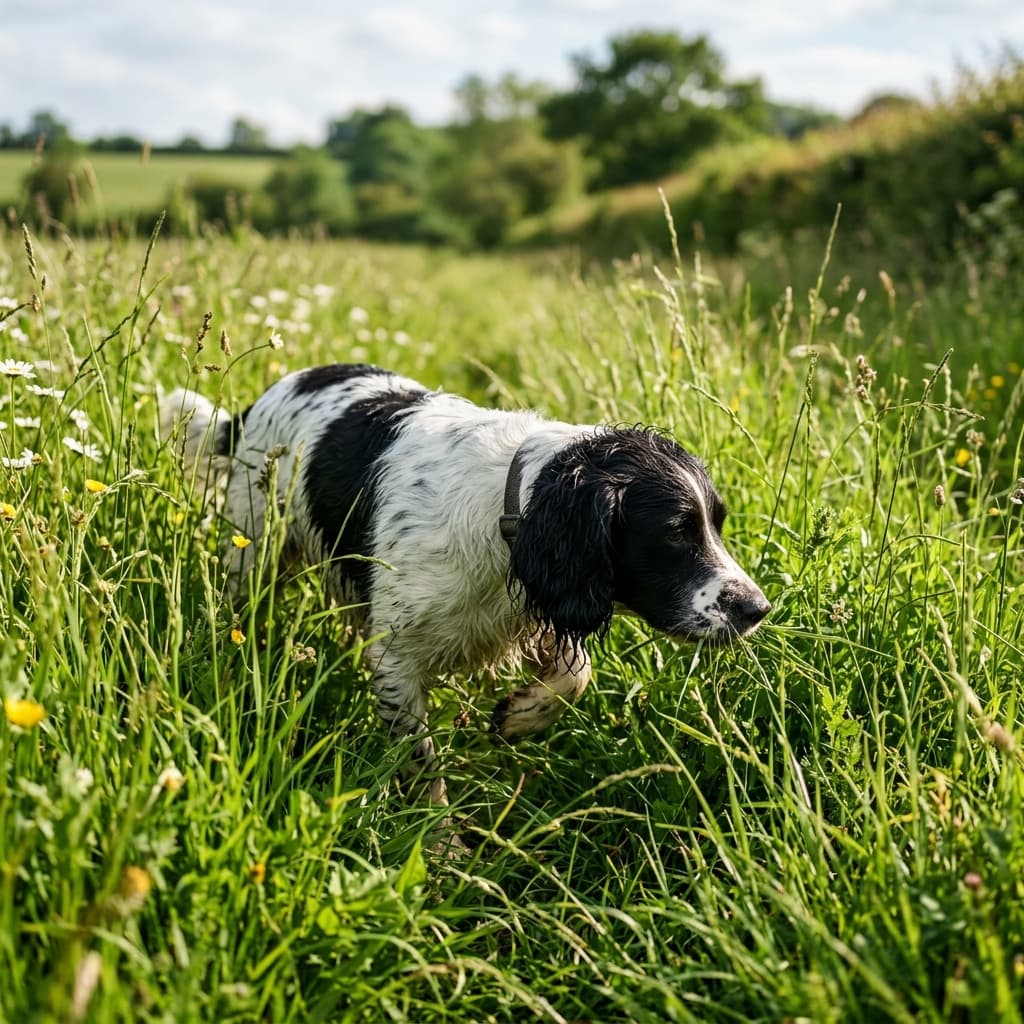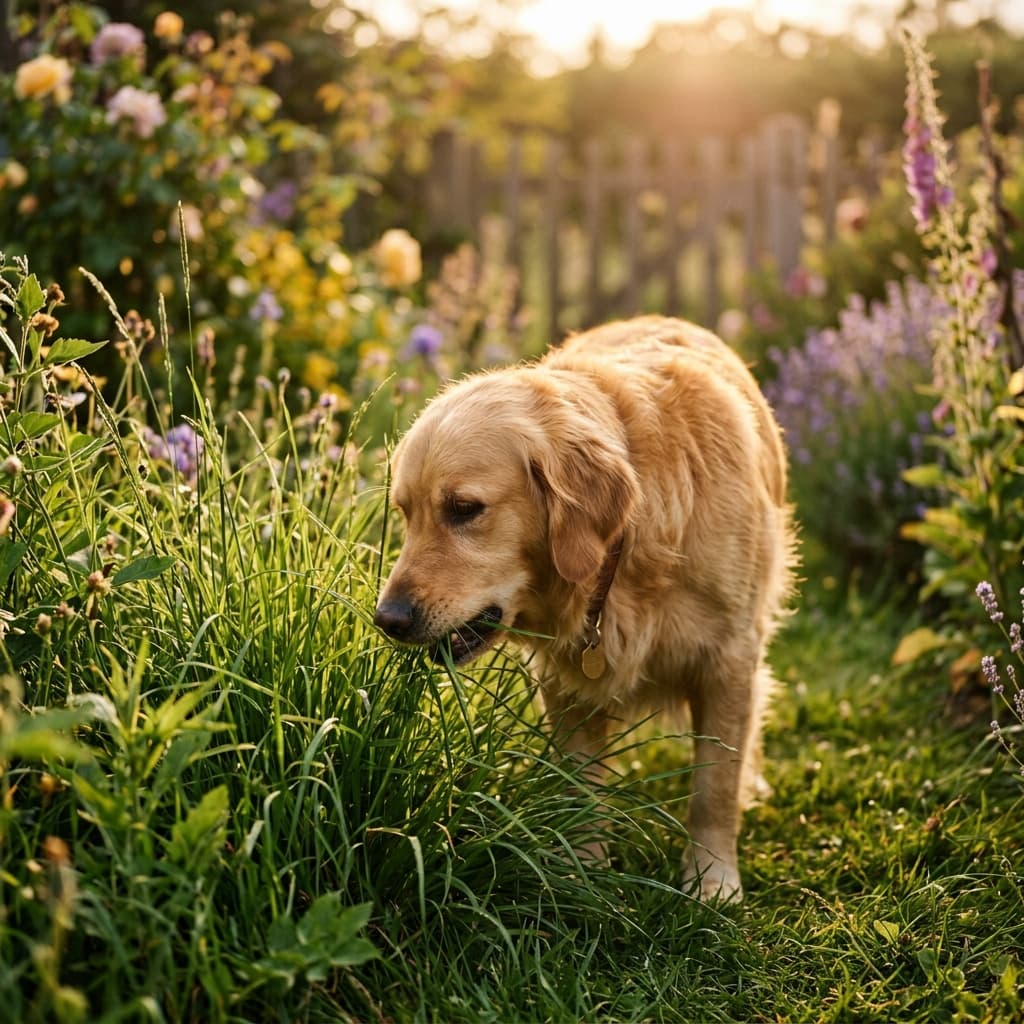
You are at the park. Your dog ignores the puzzle toy you brought and starts eating grass with focused, agricultural intent. You panic and start Googling "is grass toxic to dogs." Stop. You are misreading the situation entirely.
The reality: This is the most pervasive myth about this behavior, and clinical data directly contradicts it. A 2008 UC Davis veterinary study of 1,571 dogs found that fewer than 25% of dogs vomit after eating grass — and fewer than 10% showed any signs of illness before they started grazing. If dogs were eating grass to self-induce vomiting, you would expect far higher rates of post-grazing nausea. You do not see that. The vomiting is incidental. The grazing is deliberate, for entirely different reasons.
Your dog's ancestors were not pure carnivores. Scat analysis of wild wolves shows plant matter — including grass — present in 10% to 40% of samples. Your dog grazes because millions of years of biology tell them it is part of a balanced diet. They do not know why they want it. They just do.
Some dogs eat grass because their diet is low in plant fiber. The roughage helps the digestive system move. If your dog grazes regularly and acts completely normal afterward, check their food's fiber content. Some owners find that adding cooked green beans or a small amount of plain pumpkin to their dog's meals completely stops the behavior.
Dogs explore the world through their mouths. Spring grass is high in natural sugars and moisture — dogs find it genuinely palatable. In a yard with limited stimulation, grazing becomes a self-soothing activity. It is the dog equivalent of stress-eating a bowl of cereal.
Nibbling on a few blades is normal. The following signs are not:
Avoid treated lawns. Pesticides, herbicides, and fertilizers on public parks or neighborhood lawns are toxic to dogs. Only allow grazing on your own untreated grass.
Keep parasite prevention current. Dogs can contract roundworms and hookworms from grass contaminated with infected animal feces. Monthly preventatives eliminate this risk.
In most cases, a dog eating grass is as medically significant as a dog sniffing a tree. It is instinctive, it is normal, and the vet is not required. Understand the behavior, watch the volume, keep the grass clean — and let them eat their weird salad.
While most dogs do not vomit after eating grass, some do because the rough edges tickle their throat or stomach lining. If it happens rarely, it is normal.
Not directly. However, dogs can contract intestinal parasites from eating grass contaminated with infected feces, so monthly preventatives are highly recommended.
Possibly. Grass provides dietary fiber. If your dog grazes constantly, adding dog-safe vegetables like carrots or green beans to their diet may resolve the craving.
Yes. The parvovirus can survive in soil and grass for months or even years. Unvaccinated puppies should never eat grass in public areas.
Redirect their attention with toys when they start grazing. Ensuring they get enough physical and mental exercise also reduces boredom-induced grass eating.