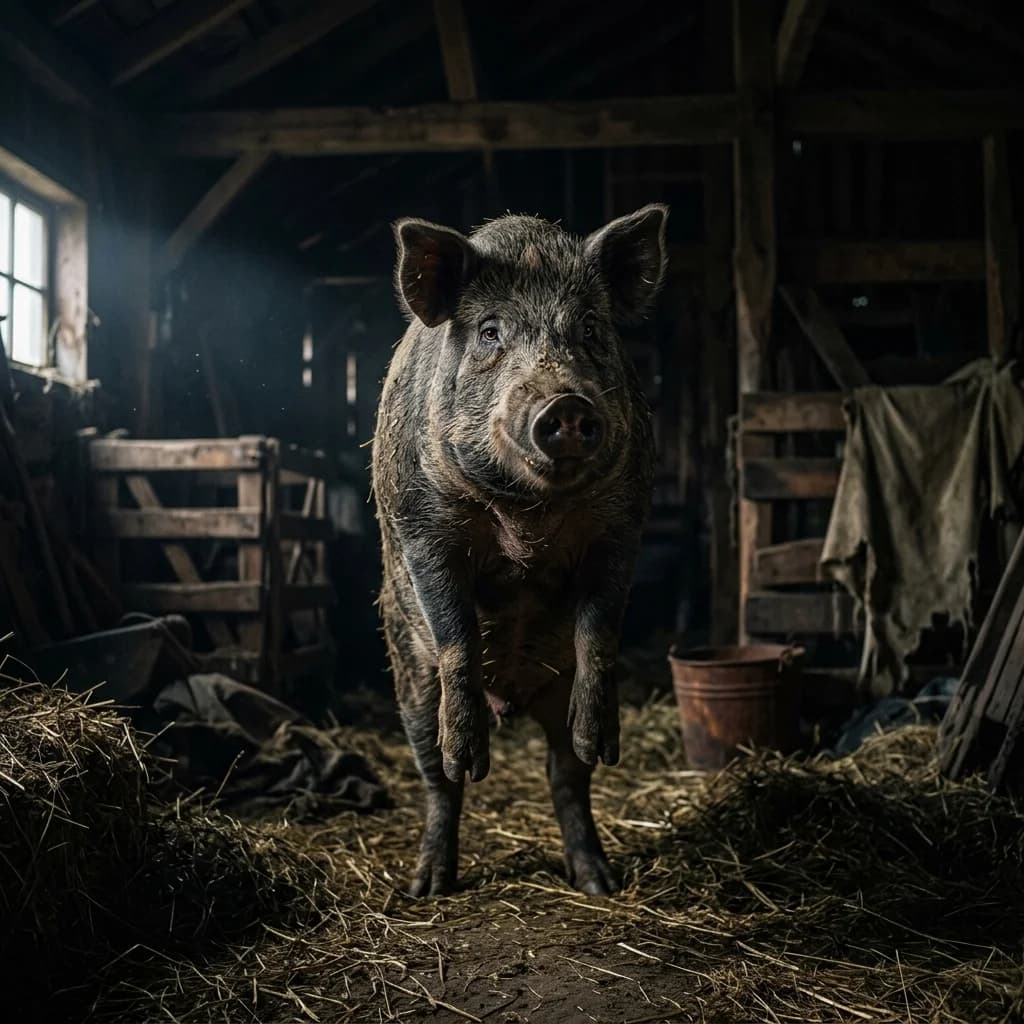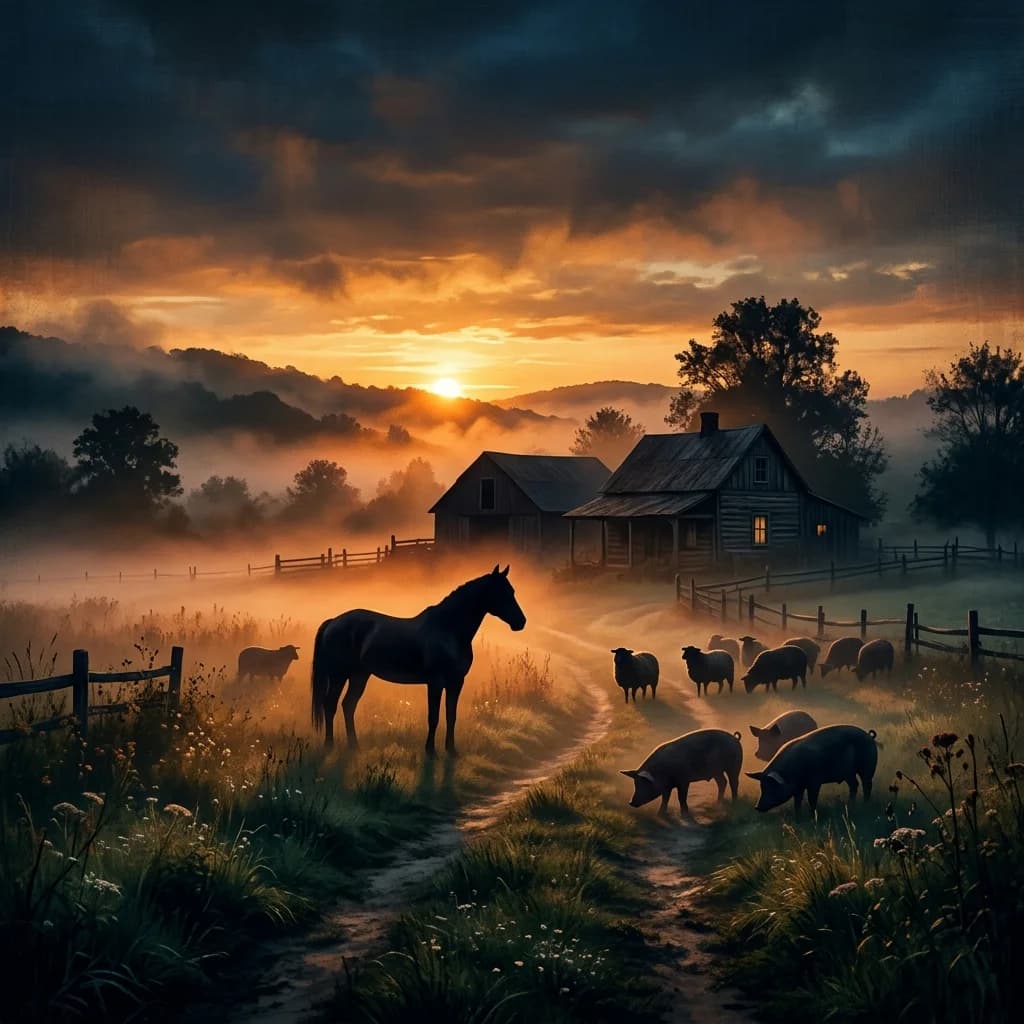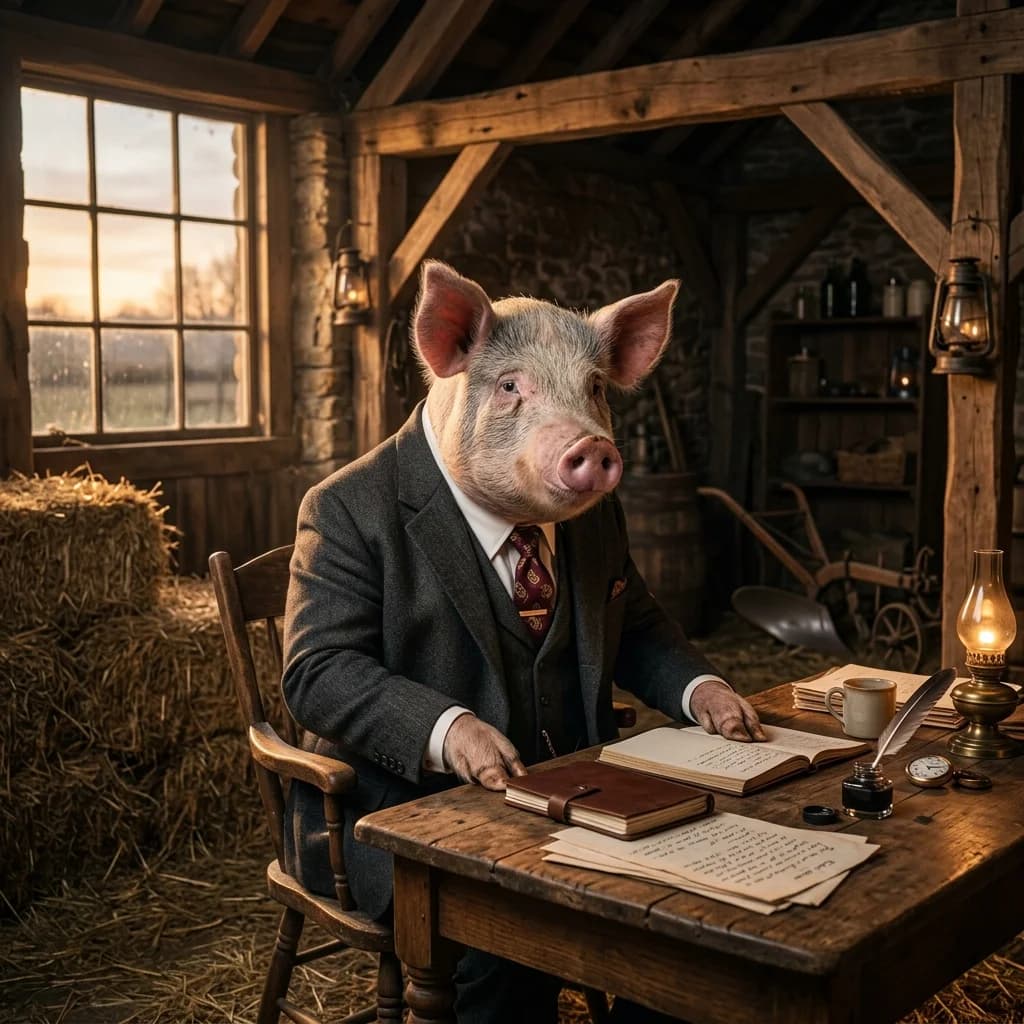
In 1945, George Orwell published a short book featuring talking pigs, overworked horses, and rebellious farm animals. Publishers initially rejected it, assuming public interest in political fables had expired.
Eighty years later, Animal Farm remains one of the most widely read and influential novels in human history.
Why did Orwell choose farm animals to deliver his searing critique of totalitarianism? And how did his novella shape the evolution of modern political fables?
If Orwell had written a standard historical novel about the Russian Revolution using human characters named Stalin, Trotsky, and Lenin, it would have read like a dry political tract.
By translating complex geopolitical history into an animal fable, Orwell achieved three brilliant narrative breakthroughs:
The central structural genius of Animal Farm is the gradual alteration of the Seven Commandments of Animalism.
Orwell demonstrates how authoritarian regimes erode democracy not through sudden violence, but through the quiet, incremental modification of language:
This linguistic manipulation remains the single most accurate depiction of political propaganda in 20th-century literature.
Animal Farm established the modern blueprint for using non-human perspectives to explore complex societal themes.
Today's serialized animal fiction and allegorical web novels carry Orwell's torch forward — using animal packs, feline clans, and shelter communities to examine authority, resource distribution, climate change, and human-animal ethics without sounding preachy.
Orwell's fable ends with one of the most chilling sentences in English literature: "The creatures outside looked from pig to man, and from man to pig, and from pig to man again; but already it was impossible to say which was which."
By using animals, Orwell created a mirror that will never stop reflecting human nature back at us.
The primary message is that absolute power corrupts absolutely, and that revolutionary leaders often become identical to the oppressive rulers they originally overthrew.
Orwell used animals to bypass political censorship and reader bias. The fable format made the critique of the Soviet Union accessible, universal, and easily translated across cultures.
The pigs represent the intellectual elite and political leadership that seize power during a revolution, eventually manipulating the working class for their own benefit.
No. While Aesop's fables are often taught to children, literary animal fables are written for adults to provide biting political satire and deep societal critiques.
Modern animal fables are frequently published on serialized web fiction platforms, where authors experiment with complex, character-driven animal stories outside traditional publishing constraints.